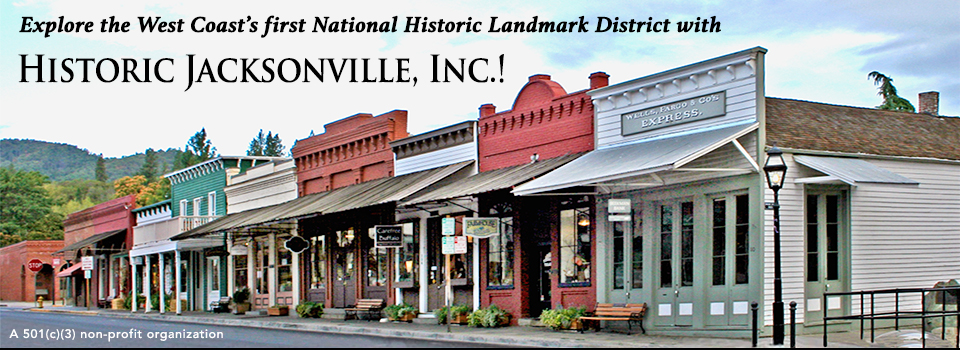

Did you know that the “Reader’s Digest” magazine was inspired by a Jacksonville event? DeWitt Wallace, the founder of the Reader’s Digest, conceived a revolutionary method for condensing magazine articles while witnessing a 1911 trial in the Jackson County courtroom—the 2nd floor of what is now Jacksonville’s New City Hall when the building was still the county courthouse.
The year was 1911. DeWitt was 22 and working on completing his education at Berkeley. He was spending several weeks in Southern Oregon peddling Oregon maps door-to-door as he worked his way through college. On his first day, he sold 12 maps around Medford, although he had to walk 25 miles to do so.
Not discouraged, he stayed on the move, talking with veteran salesmen in hotel lobbies and picking up their stratagems. As he widened his circle of acquaintances, DeWitte discovered that he could learn something from anyone he could talk to. The average person might not have an academic degree, but his intelligence was not to be underestimated. Most were as curious and hungry for knowledge as he was.
After walking out to Jacksonville one day, DeWitt took a break from the weather, waiting out a rainstorm in the Jackson County courtroom. While drying out, he witnessed a battle of wits between two lawyers. He noticed how the two opposing lawyers were able to condense the facts of the case into tight and easily understood arguments. DeWitt realized that he could apply that same technique of examining witnesses to every imaginable life situation. And thus was born a method for taking articles of lasting interest and condensing them into a shorter and more readable form.
The trial proved to the young student that marvelous sources of insight were everywhere—overlooked, undetected, but to be had for the asking. So, Jacksonville’s New City Hall, Jackson County’s 1884 courthouse, helped change the history of America’s reading habits!