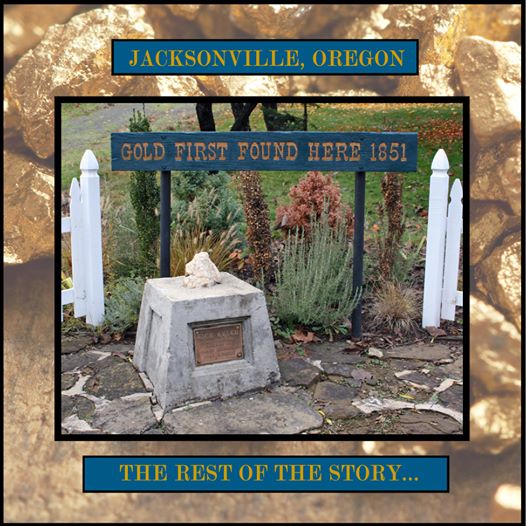
Of all the Jacksonville, Oregon “firsts,” the question of who first found gold may be the most debatable. The “Gold First Found Here” marker on Applegate Street where it crosses Daisy Creek would have you believe that James Clugage and James Pool, two packers carrying goods to the mining camps in California, did a little panning in the creek in the winter of 1851-52 and found the first “color.”
But the story is a little more complex than the marker would have you believe. Several gold discoveries had been made in the Illinois Valley at Josephine and Canyon creeks and Sailor’s Diggings in 1851 before the first Rogue River Indian War broke out.
And the previous fall, the son of Alonzo Skinner, the local Indian agent, and one of his employees, a Mr. Sykes, had found gold in nearby Jackson Creek. Clugage and Pool learned of their discovery when they spent a night at the Skinner homestead. So, before heading to Yreka, Clugage and Pool took time to pan a little and, voila!
Clugage and Pool hightailed it south and immediately filed land claims on what is now most of Jacksonville. They returned and spent the next few weeks mining, but then Clugage did something unheard of—he publicized his “find,” even boasting to California newspapers of taking out 70 ounces of gold a day from his claim. Thousands of miners poured over the Siskiyous into the Valley, closely followed by merchants, gamblers, courtesans, and settlers—all needing a mining, business, or home site.
In the case of Jacksonville’s gold discovery, the honor of “first” probably belongs to Skinner and Sykes. But Clugage may have found the mother lode—he made a fortune selling land!