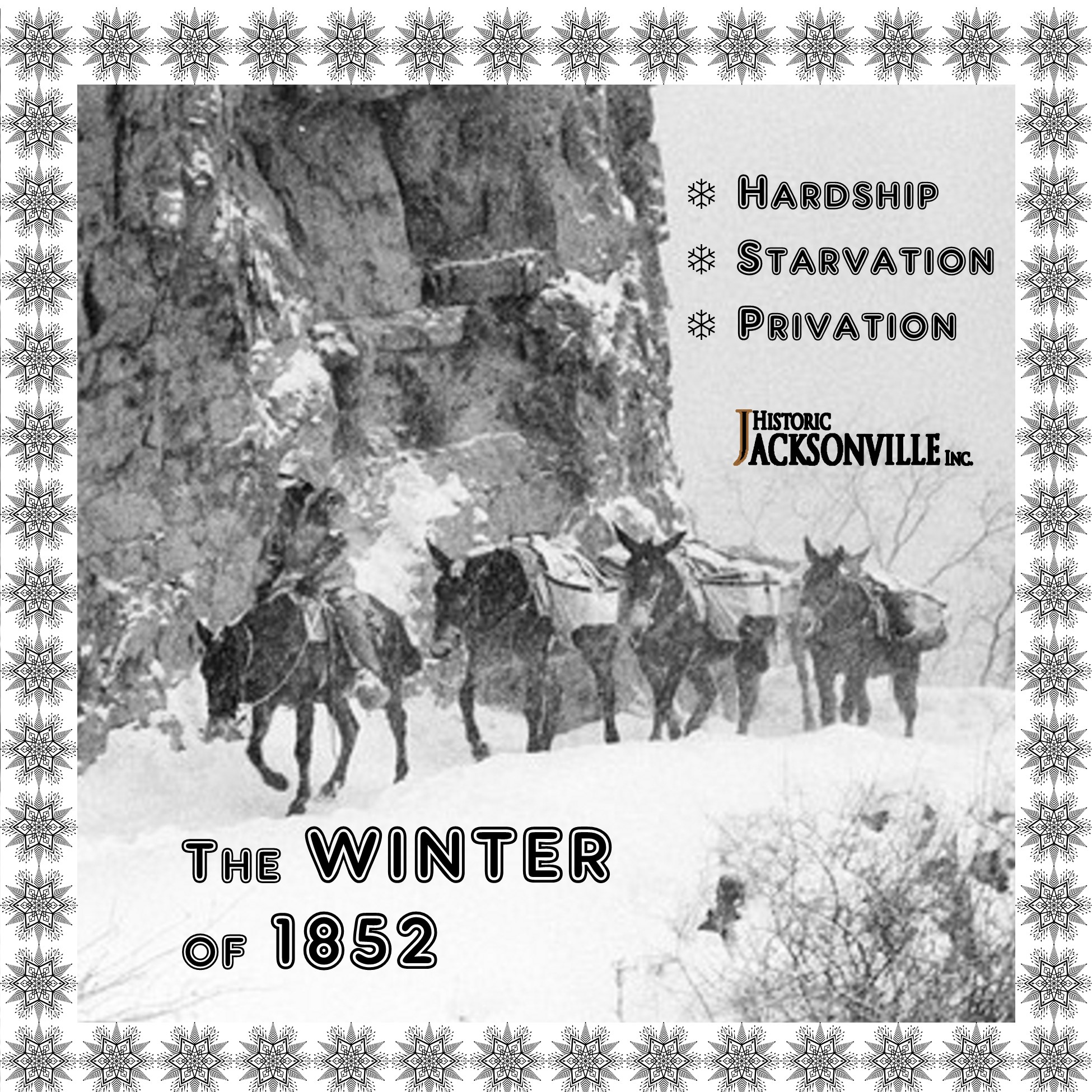
The remnants of our recent 8-inch plus snowfall (December 28, 2021) had Historic Jacksonville, Inc. thinking about the winter of 1852—also known locally as “the winter of hardship, starvation, and privation.” Since the discovery of gold earlier that year, both miners and settlers had poured into the Rogue Valley. Population estimates were as high as 10,000. As this influx of new arrivals scrambled to stake claims and build shelters, winter broke hard and mean. By early December the snow was piling up—2 ½ feet deep in the valley; 10 feet deep over the mountain passes. All the trails were blocked; travel was cut off.
Of course no one had anticipated this kind of winter weather. The merchants had no extra goods; few of the miners had stocked up for winter; newcomers who had just crossed the Oregon Trail had only their remaining supplies; and those who had arrived a year earlier had been able to produce only a very limited quantity of food or merchandise, certainly not enough to meet the demand. Prices skyrocketed. By year end, there was no more beef or gunpowder to be had. Salt was literally worth its weight in gold and not to be had even at that price.
The rains that followed only made things worse as floods took out trails, bridges, and mining claims. Most settlers and miners subsisted on “venison straight,” as they termed it—unsalted deer meat. The combination of weather, exposure, and malnourishment led to widespread illness.
What became known as “the starving time” finally ended in late March of 1853 as the first pack trains of supplies began to arrive. The first flour that came in sold for about $2 per pound. Salt sold for $4 an ounce, and the miners would eat it like children would sugar. Actual sugar sold for $2 per pound as did coffee. A pound of tobacco would cost you $10.
Our recent snowfall may have interfered with some of our holiday plans but considering what Jacksonville’s original settlers experienced some 170 years ago, 2022 should be a piece of cake!