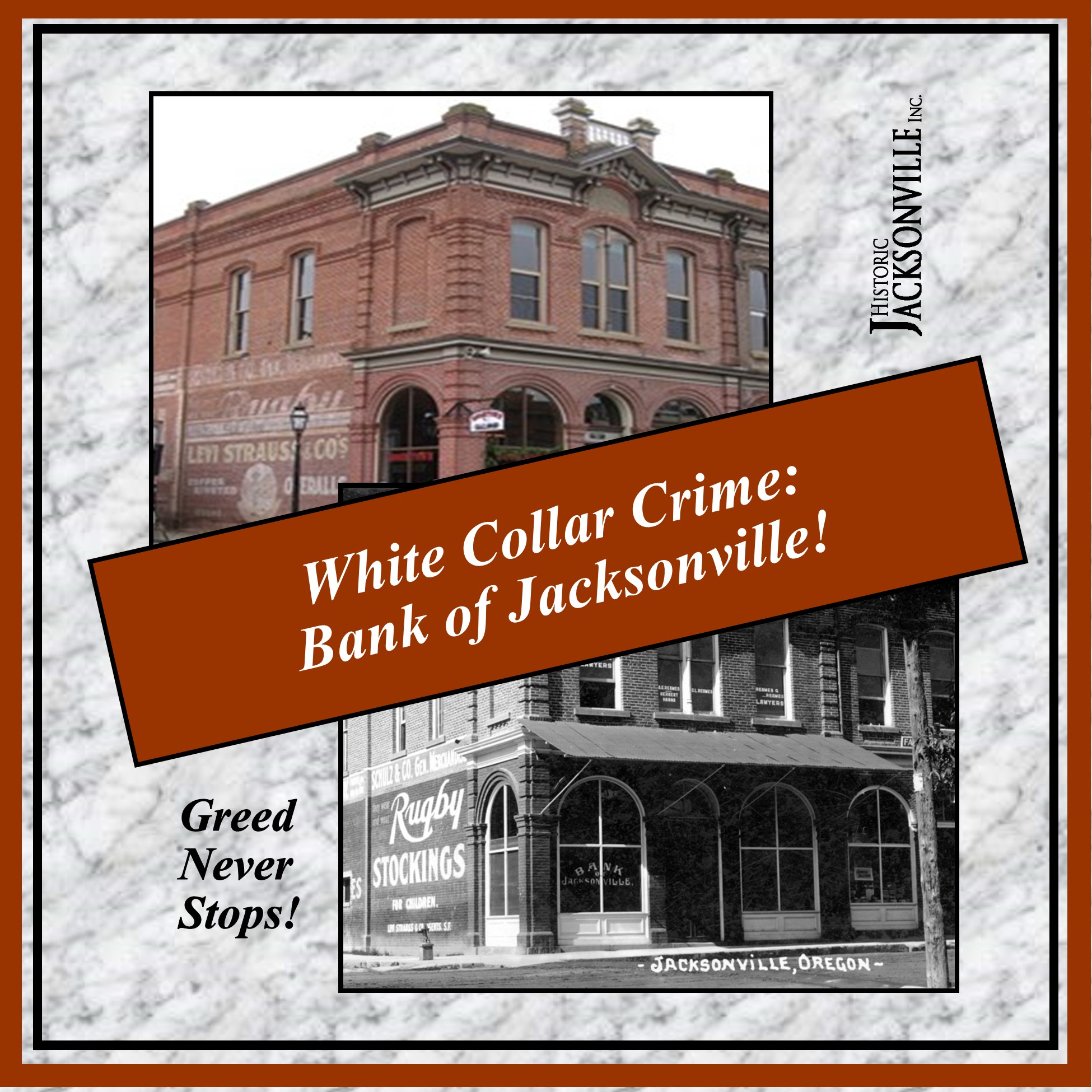
One of the reasons Cornelius Beekman closed his bank in 1912 was the 1907 opening of the Bank of Jacksonville on the ground floor of Red Men’s Hall across California Street at the corner of South 3rd. However, it turns out that the Bank of Jacksonville was not exactly on the “up and up”!
In August of 1920, its President, W.H. Johnson, was arrested and indicted on 30 felony counts including misstatement of the bank’s condition, receiving monies in a known insolvent banking institution, false certification of checks, and making false statements to a bank examiner. The President of the Bank of Jacksonville became one of the more distinguished “guests” of the Jackson County jail.
Johnson was not only bank President and cashier, he was also City Treasurer and deacon and treasurer of the Jacksonville Presbyterian Church. Johnson was convicted and spent 10 years in the state penitentiary. Dozens of prominent citizens were eventually charged with aiding and abetting the defrauding of the bank—including the Jackson County Treasurer.
Depositors were both shocked and panicked—bank monies were not insured! In 1930, when the investigation was finally closed and the remaining bank assets liquidated, depositors received at best 17 cents on the dollar. Most lost their life savings; the County lost $107,000.
While Cornelius Beekman’s late 19th Century banking practices may not have been exactly orthodox, they were both ethical and community oriented. Learn more about them in Historic Jacksonville’s Beekman Bank “Behind the Counter” tours every weekend this summer.