Category Archives: People

Gin Lin

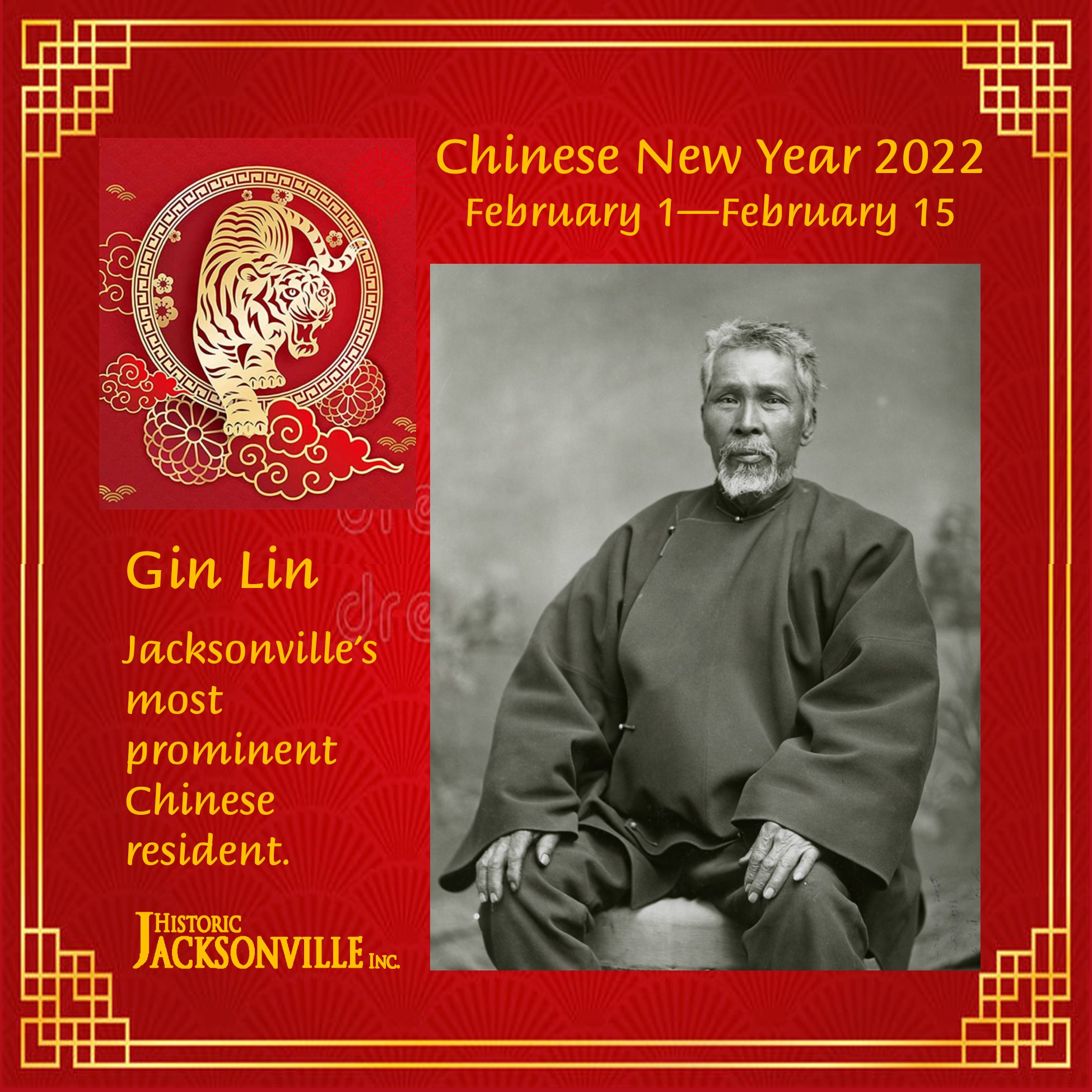
The 2022 Chinese New Year continues through February 15, so Historic Jacksonville, Inc. is again highlighting Jacksonville’s early Chinese population.  Did you know that a Chinese labor boss, Gin Lin, was probably one of the wealthiest men in town during his time here? 

Gin apparently left China shortly after gold was discovered in California in 1849. He was one of the Chinese men who came by the thousands, lured by tales of “Gold Mountain.” 

By the 1860s, Gin was in Oregon. Despite state laws prohibiting Chinese property ownership, Gin was able to purchase a claim in 1864 on the Little Applegate River at the mouth of Sterling Creek for $900. He subsequently leased or purchased other “played out” placer mines in the vicinity from white men who had already taken out the easy gold.  He was able to hire other Chinese laborers, using them to work his own claims and hiring them out to other mine owners.

Gin was honest and fair, even helping some of his men purchase their own claims, ensuring they were legally recorded and the proper taxes paid. As a result, Lin’s crew was willing to work hard for him and many of the laborers Gin had previously contracted to other mine owners came to work for him.  Local legend credits him with founding the old mining ghost town of Buncom to house his Sterling Creek mining crew.

When the placer gold was depleted, they began excavating for gold in old stream beds long since buried in adjacent hillsides. To make the effort profitable, Gin is credited with introducing hydraulic mining to Southern Oregon. A remnant of this is the Applegate’s Gin Lin hiking trail.

Through industry and ingenuity, Gin Lin and his mining company began to play an important role in Southern Oregon’s economy. It also helped Gin amass a fortune. When he returned to China in the 1890s, he reportedly was worth over $2 million in gold from his various mining claims. 

George “Bum” Neuber #2

Jacksonville’s Calvary Church at 520 North 5th Street was originally the site of George “Bum” Neuber’s home. Bum kept a petting zoo for children in his back yard. However, he was known more for being a “sporting man.” He owned a downtown saloon and card parlor, owned the Jacksonville Gold Bricks baseball team, speculated in copper mining, and was a founding member of the Gold Ray Rod and Gun Club. As noted in last week’s trivia, he was also a prankster. By the late 1880s, that newfangled invention, the bicycle, had become a popular mode of transportation and exercise.

According to an April 1897 Medford Mail, when a party of cyclists stopped to rest in Jacksonville one Sunday afternoon, Neuber and a pal “borrowed” a couple of the “wheels”, presumably to take a spin around the block. Apparently Neuber wasn’t good at navigating turns. Although he fell at least once, tearing his pants and scraping his knee, he didn’t stop until he reached Medford…just in time to take the train back to Jacksonville.

George “Bum” Neuber #1

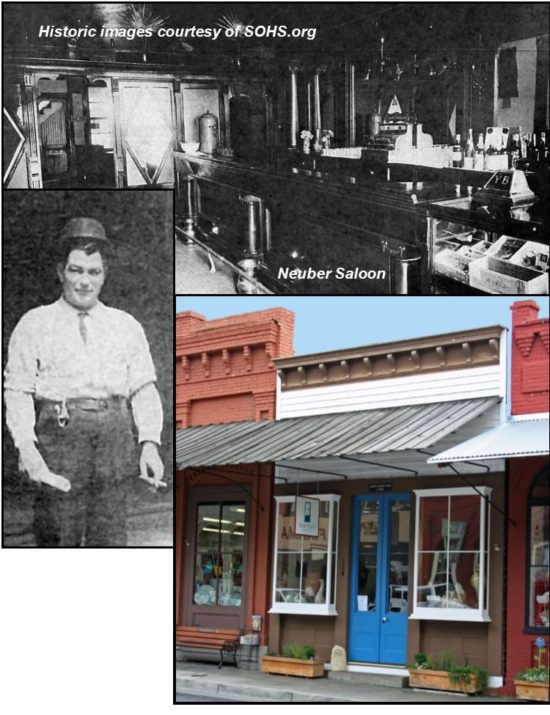
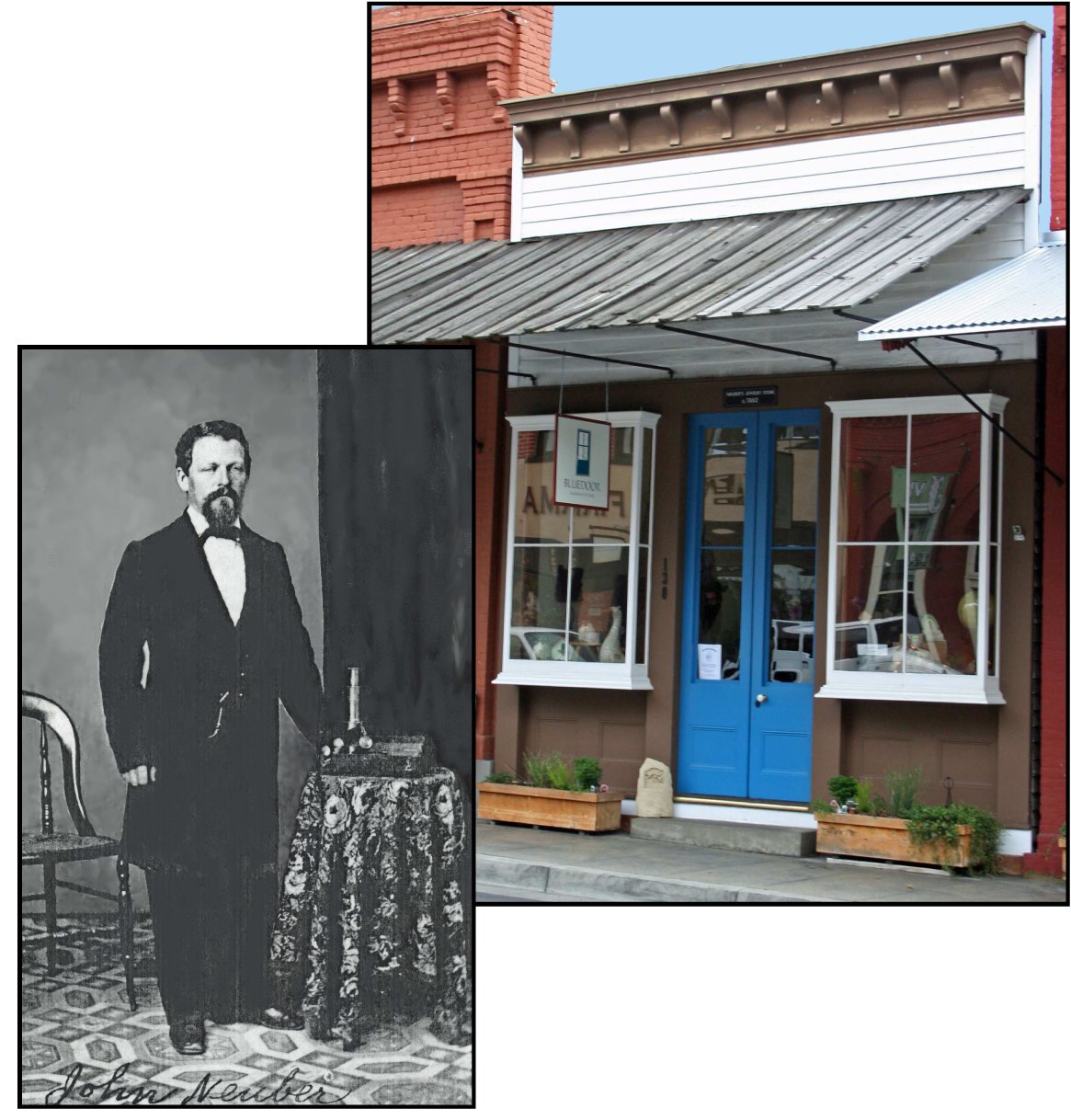
George “Bum” Neuber (1865-1929) was a prankster and a joker. He was responsible for firing the Jacksonville cannon in the 1904 “celebration” that wiped out most of the windows on California Street. He was a “card” in the language of his day, so it seems appropriate that he ran a Jacksonville card room and saloon. Located at 130 W. California Street, his saloon and gaming establishment occupied the same location where his father, John Neuber, had opened the town’s first jewelry shop.

John specialized in solid gold buckles for women’s belts. George specialized in relieving customers of their gold. In addition to his card room and saloon, he also owned the Jacksonville Gold Brick baseball team and was known for bringing in “ringers” to ensure the success of his players.

George Schumpf

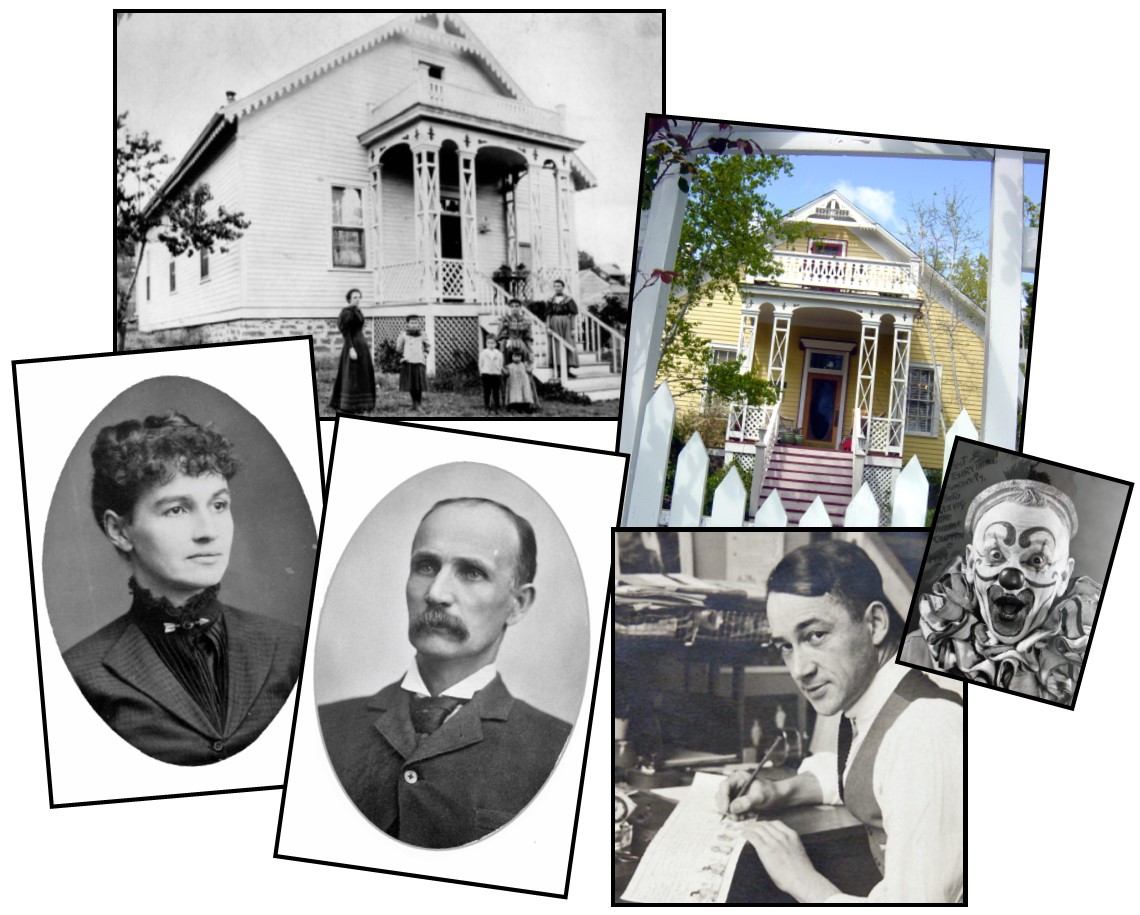
The Classical Revival style home at the corner of Fir and South Oregon in Jacksonville is known as the Colvig House. Since Historic Jacksonville, Inc. recently had a Colvig family descendent ask about it, we thought we would share a little of its history. The house was probably built in the late 1870s for George Schumpf, the town barber. Schumpf, a native of Alsace, Germany, was the town barber for most of his life, also providing “bathing rooms and bathtubs” in his California Street shop. In 1887, Schumpf sold the house to William and Addie Colvig following his first wife’s death.

William Colvig, a lawyer, served three terms as Jackson County District Attorney. After this latter appointment, he finally got around to taking the bar exam. Colvig was an authority on Shakespeare and spoke fluent Chinook, the language of the local Indian tribe. He was also a soldier and was among the party of soldiers that first mapped Crater Lake.

The house is also known as the “Bozo the Clown House.” Vance “Pinto” Colvig, the youngest of the Colvig children, was the original creator of Bozo the Clown. Pinto worked as an animator for Walt Disney and supplied many Disney cartoon voices, including those of ‘Goofy,’ ‘Pluto’ and two of the seven dwarfs. He also wrote the song, “Who’s Afraid of the Big Bad Wolf.”

Frederick Frick

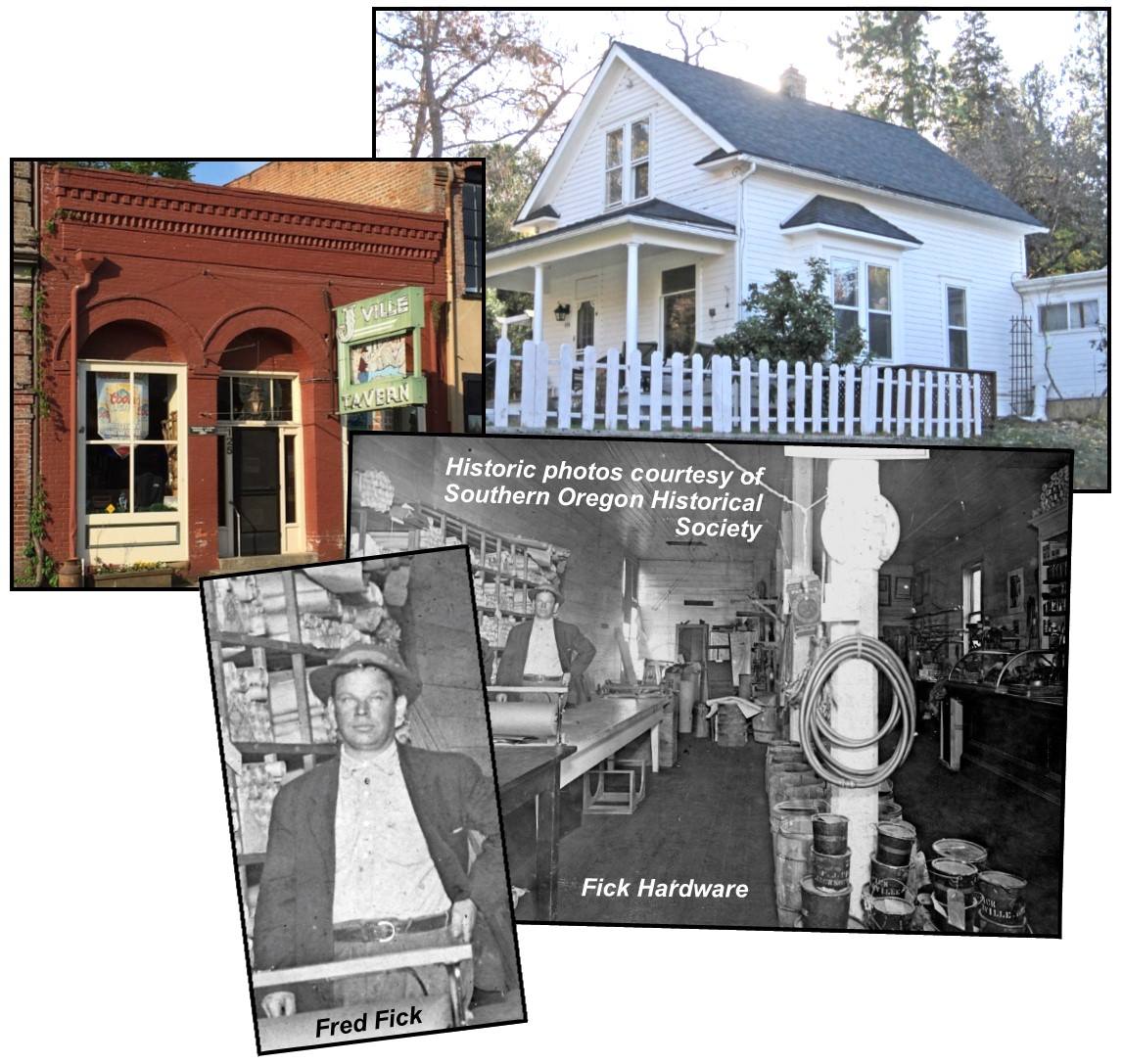
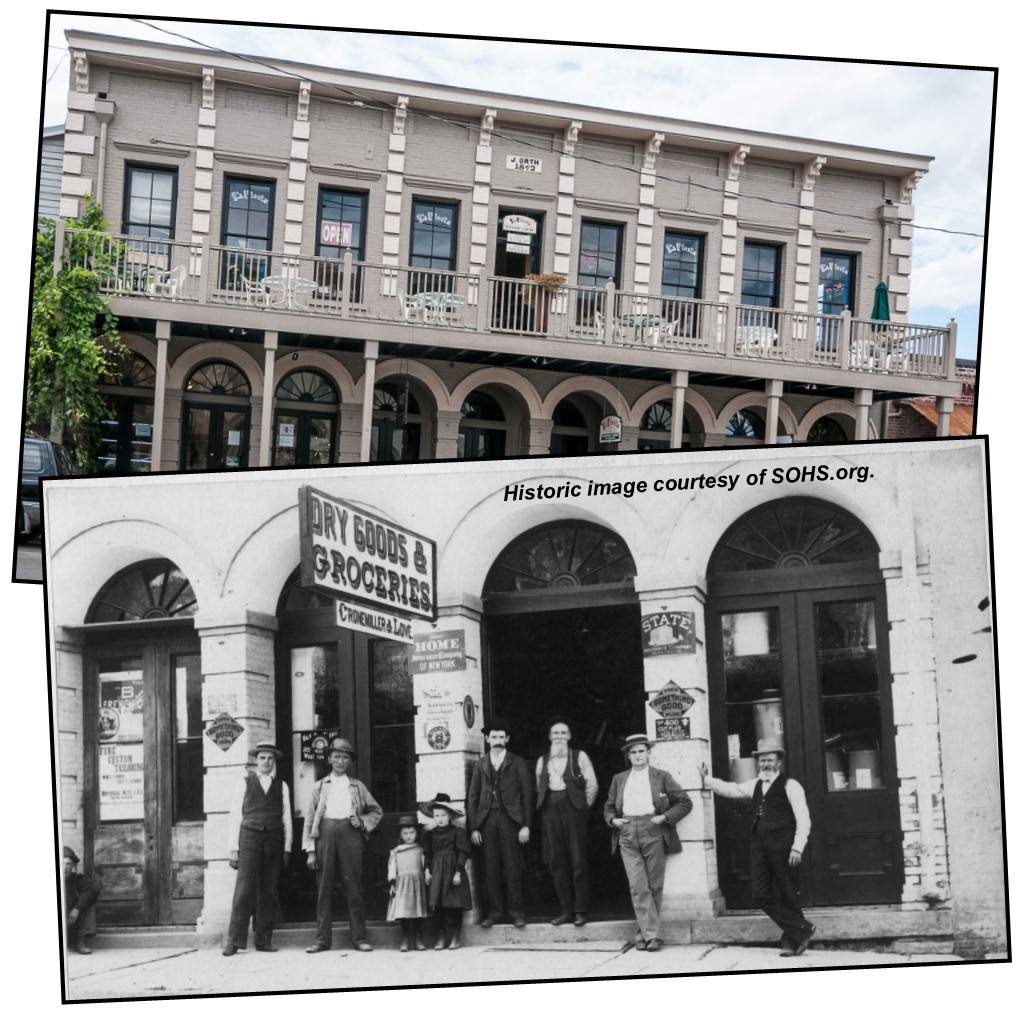
Frederick “Fred” Fick, born in 1878, was the oldest son of Jacksonville’s German butcher Nicholas Fick. At age 19, Fred left home to go into the “building business” and by 1906 is listed in local directories as a “building contractor.” He participated in many Rogue Valley construction projects including the 1908 Jacksonville school, now Bigham Knoll. Around 1909 he built the Fick House at 810 South 3rd Street in Jacksonville. For 25 years he owned and operated a hardware store at 125 W. California Street, now home to the Jville Tavern.

He also served on the City Council and various standing committees. In 1920 Fred was a member of the temporarily successful committee charged with keeping the Jackson County Courthouse in Jacksonville; in 1926 he spearheaded a tree planting project on the “Jacksonville Highway” (North 5th); and in 1928 he petitioned the County Court to establish a museum in the U.S. Hotel. But in 1935 Fred saw the “handwriting on the wall” and moved his hardware business to Medford where “Fick’s Hardware was for many years located on West Main Street.”

“First Teacher in Jacksonville“

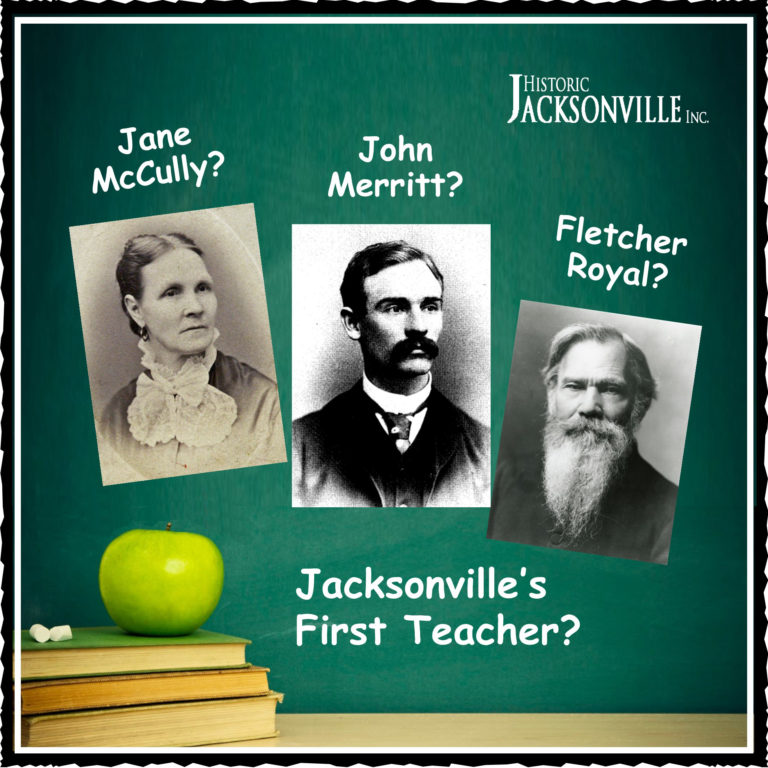
The location of Jacksonville’s first schoolhouse may be open to debate, but surely we know who was the town’s first teacher. Or do we?  Rev. Thomas Fletcher Royal is credited with having established the first school in Jacksonville in 1853, albeit we’re not sure where. 

One source says the school was organized by Royal’s sister, Mary Elizabeth Royal, and that Jane McCully, a trained schoolteacher who was the 3rd “proper” white woman to arrive in Jacksonville, was the first instructor.  Another source says that Mary Elizabeth Royal was the teacher.  However, Rev. Royal, in his journals, records renting a house from Col. John Ross “for a school and church purposes” where Rev. Royal’s brother, James Henry Bascom Royal, taught school one winter and spring (1854).

The following year the Oregon Conference of the Methodist Episcopal Church accepted J. H. B. Royal as a member and assigned him the principalship of the newly formed Umpqua Academy at Wilbur, Oregon. Then Rev. Royal bought another house and turned the front room into a school.  His sister, Miss Mary E. Royal (later Mrs. John Flinn), took over the teaching duties in Jacksonville and taught that summer and winter (1854-5).  We’ll note that Jane McCully did open the first private academy in Jacksonville, but that was not until 1862.  And John Merritt, another individual sometimes listed as the first teacher, became Jacksonville’s schoolteacher and principal in 1875.  Who knew?

Emil DeRoboam

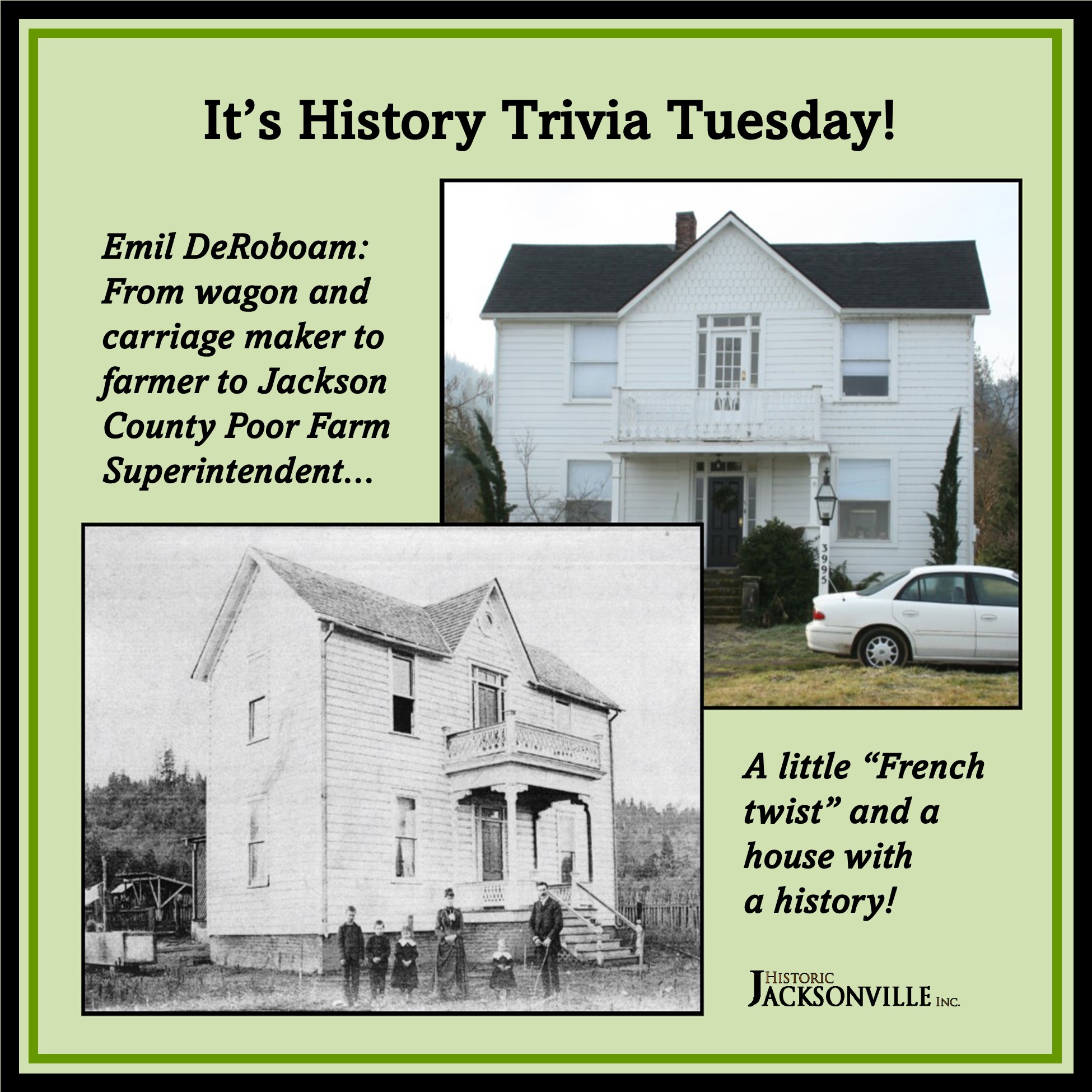
Have you ever noticed the 2-story Carpenter Gothic style farmhouse at 3995 South Stage Road just past Dancin Vineyards?  In the late 1800s, this was home to Emil DeRoboam and his family.  DeRoboam was the nephew of U.S. Hotel proprietress Madame Jeanne DeRoboam Holt and prominent in his own right.

After immigrating to the United States in 1871 with his widowed father, Jean St. Luc DeRoboam, Emil became a wagon and carriage maker.  The Democratic Times newspaper at various times declared him to be “an excellent mechanic” and “an excellent wheelwright.”   After his father married rich Prussian widow Henrietta Schmidling in 1873, Emil courted and married her daughter Rosa 2 years later.  The couple had 4 children. 

In the mid-1880s Emil purchased the 642 acre “Bellinger land claim” for “general farming and stock raising…directing his efforts toward making his farm a pleasant home and paying property.”  He succeeded in the latter, obtaining the contract for the “county hospital” in 1884 and the contract for “the county poor” in 1886.  For 20 years, DeRoboam was superintendent of the Jackson County poor farm, caring for the county’s wards on his farm.

DeRoboam was described as “a progressive man” and “prominent in political undertakings.”  He was one of the chief promoters of rural free delivery, the delivery of mail directly to farm families. He was active in the Republican Party from shortly after his arrival in the U.S. until his death. He was also associated with several fraternal organizations—he “passed all the chairs” in the International Order of Odd Fellows; he was a charter member of the Jacksonville Lodge of the Improved Order of Red Men; and he was a member of the Ancient Order of United Workmen.

Emil Britt

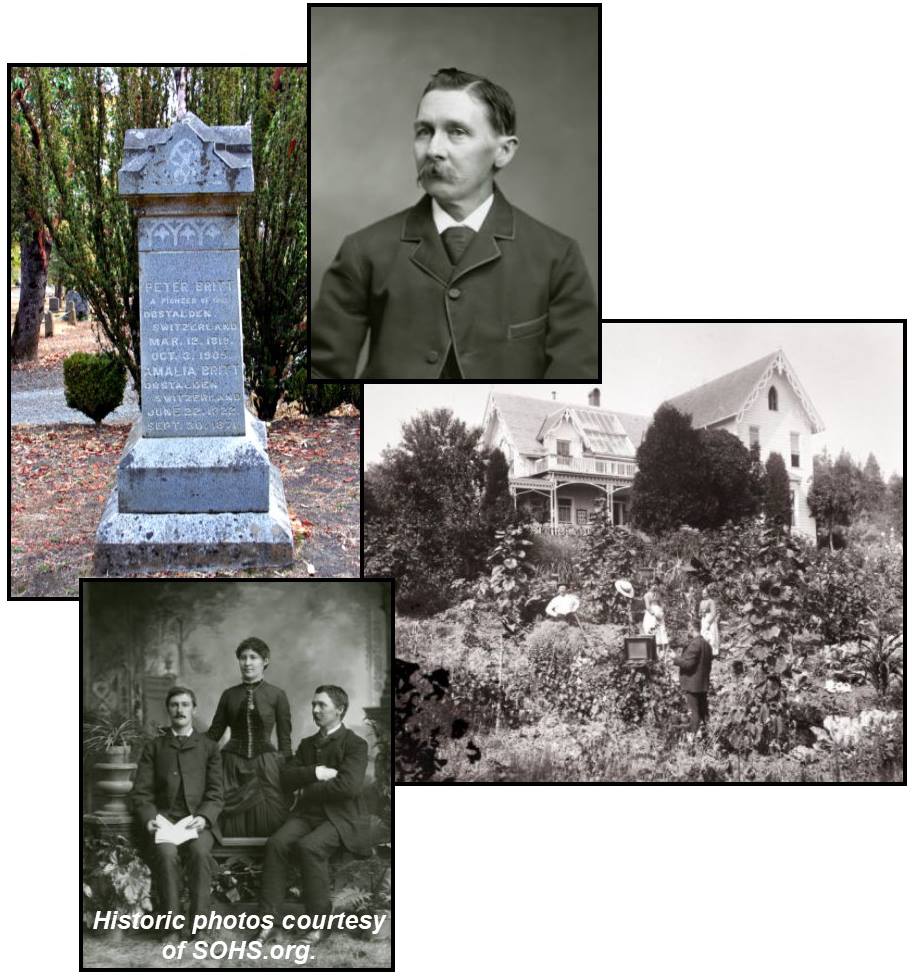
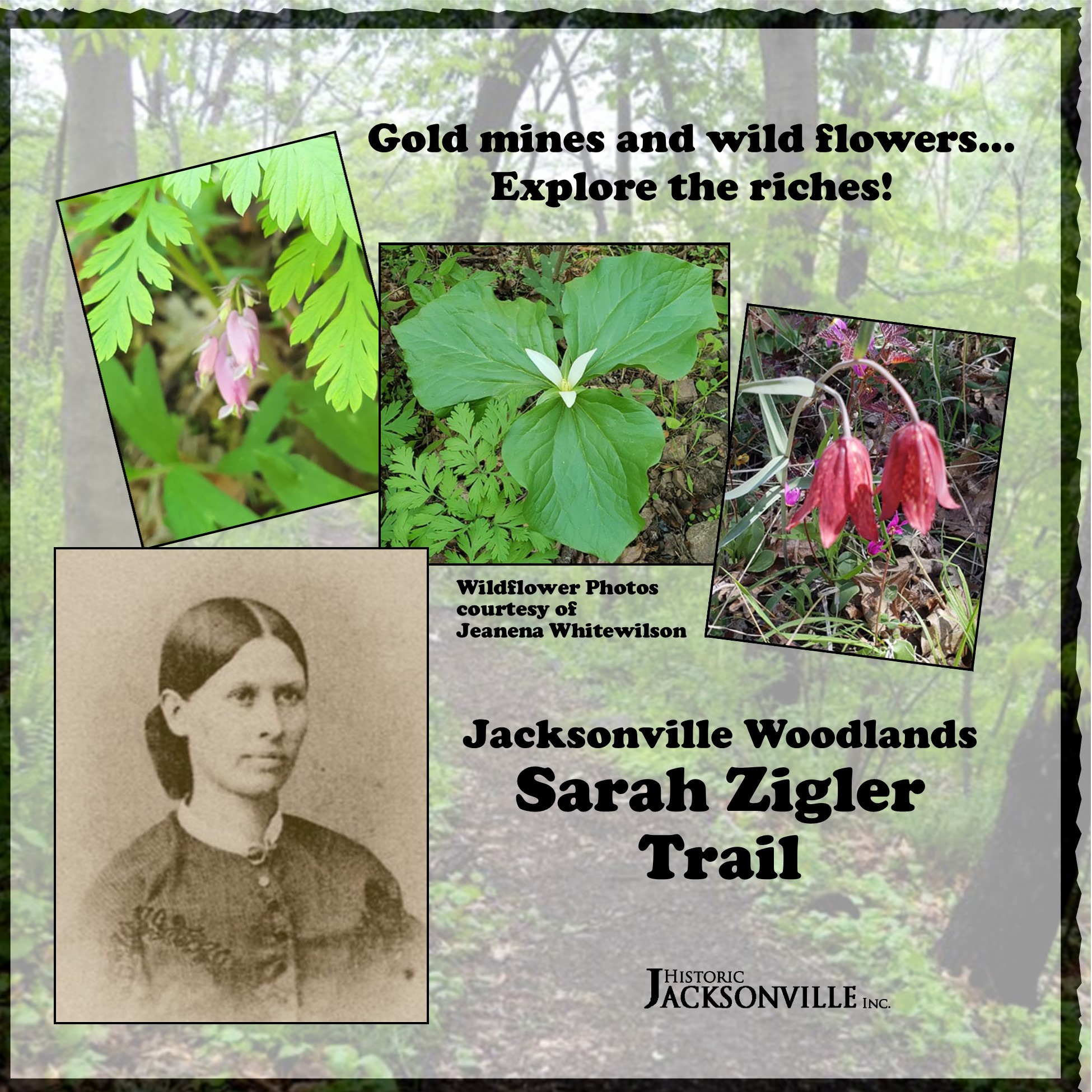
Have you ever pondered the Giant Sequoia that marks the Jacksonville Woodlands Sarah Zigler trail head?  Giant Sequoias are not native to this area, so how did it get there? 

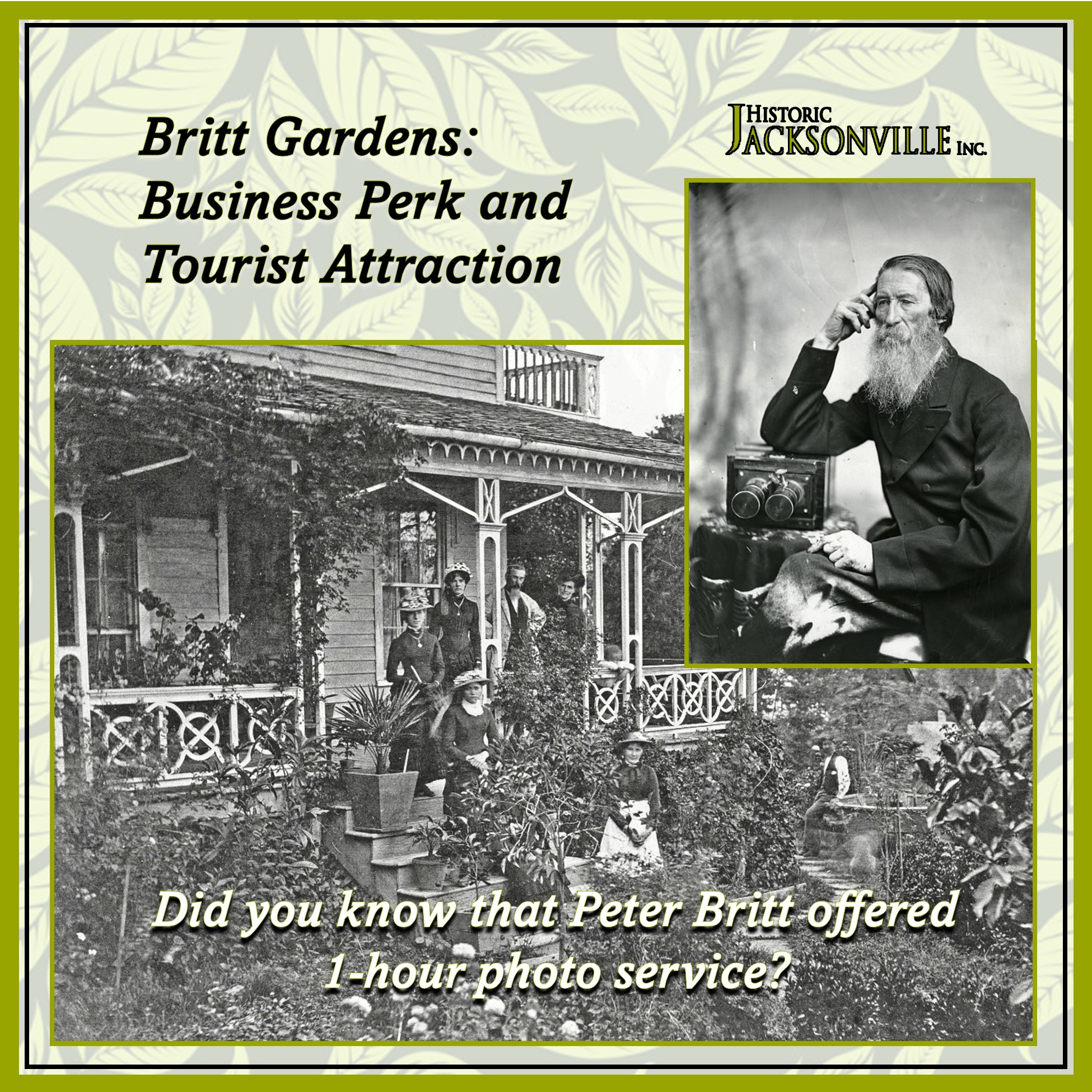
All of this acreage was originally part of Britt’s donation land claim. Peter Britt was not only a photographer, he was also a horticulturalist. In fact, he’s considered the father of Southern Oregon’s commercial horticulture industry and his “Britt Gardens” were a major tourist attraction.

Britt planted this tree as a seedling on the day his first son, Emil, was born—March 22, 1862. That’s Emil standing in front of the tree. The photo may have been taken by Peter Britt himself in the late 1890s. 

This majestic Giant Sequoia is now 160+ years old!  Standing over 200 feet tall, it’s an official Oregon Heritage Tree. The next time you head up to the Britt Gardens, take a few minutes to walk out to the Zigler trail head and the Britt Sequoia and admire this symbol of history, vision, and endurance. 

Dr. Will Jackson

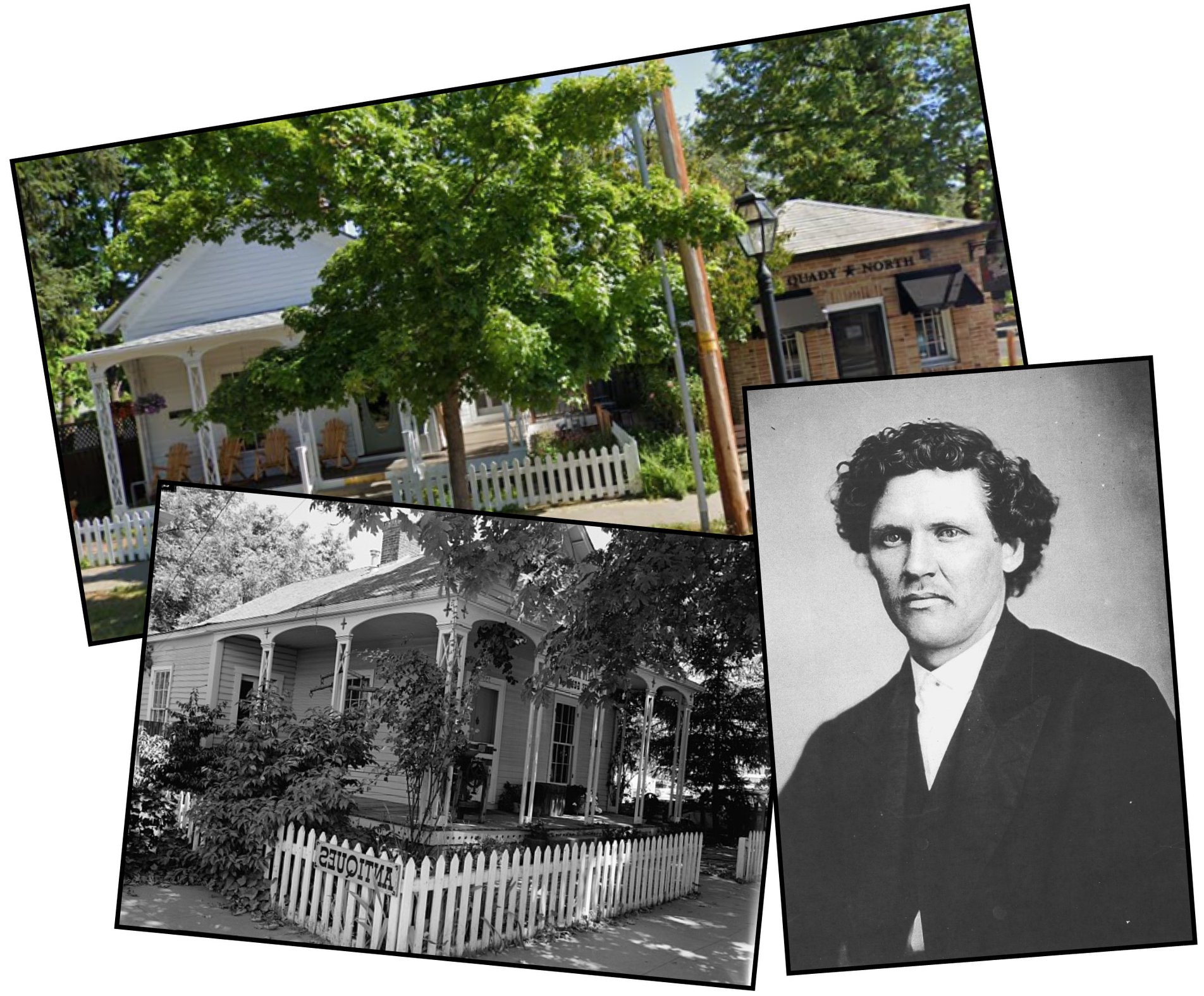
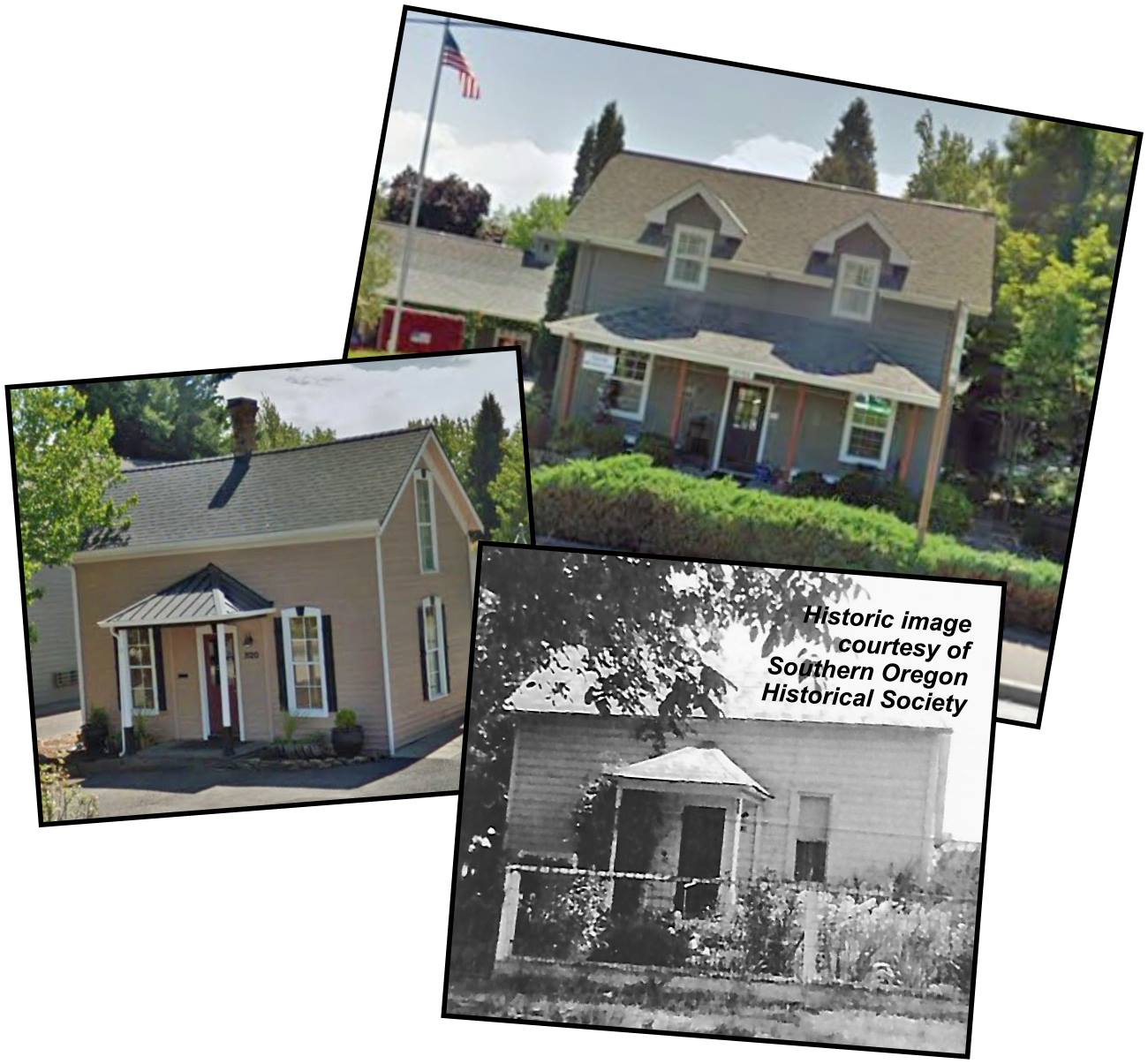
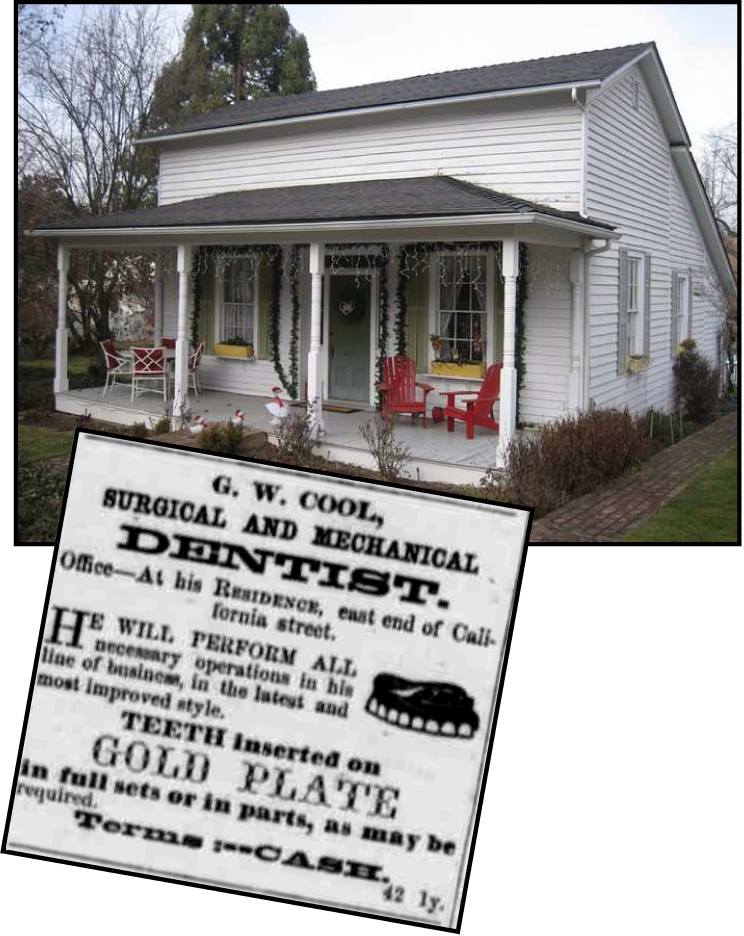
Dr. Will Jackson was a popular Jacksonville dentist from the late 1860s to the late 1880s. Actually, he was probably the only Jacksonville dentist during that period. Although he pulled teeth and supplied “nice natural looking teeth…for those wanting,” he is also believed to have been the first dentist in the Valley to use fillings as an alternative to extraction.

A colleague remembered him as “quite a large man, with black hair…who wore that determined look that made the small boy in need of his services feel that he was not to be trifled with.” Jackson’s house at 235 E. California Street was his second home at that location, constructed in 1873 after a fire took out most of the block. It’s now home to the Miners Bazaar. Jackson’s dentist office was “12 feet east” where Quady North’s tasting room now stands. The entire corner of California and 5th streets was originally the site of the corral and stables of Cram & Rogers, the company that brought C.C. Beekman to Jacksonville, but from 1857 on, that corner housed a succession of doctors’ offices.

David Linn

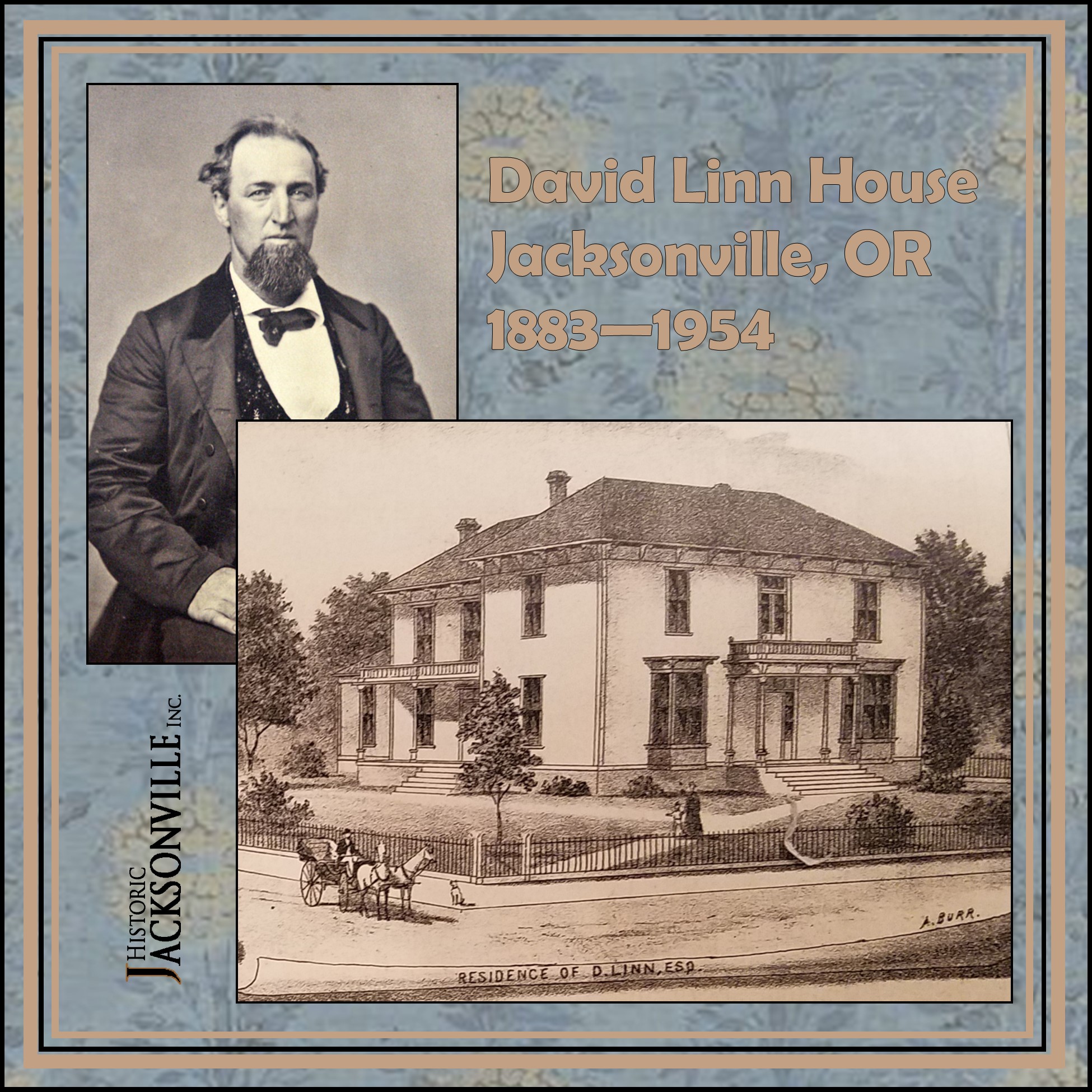
Today we’re using our imagination to visit a residence no longer on the map—the home of David Linn, one of the town’s most prolific early builders.  Born in Guernsey County, Ohio, in 1826, Linn was a self-supporting carpenter and cabinet-maker at age 14 and an active contractor and builder by 25.  Arriving in Jacksonville in the spring of 1852, Linn was instrumental in transforming the mining camp of Table Rock into the town of Jacksonville. During his active career, he built a fort, public and commercial buildings, 2 churches, houses, staircases, furniture, mining equipment, and coffins.  Linn also served as Jackson County Treasurer for 14 years; was a member of the Jacksonville City Council and served as Mayor; and was on the school board. 

Around 1866, Linn constructed a 1-story house at the corner of West F Street, across North Oregon Street from the home of his father-in-law, Squire William Hoffman. It’s possible that Hoffman gave the land to Linn or his wife, Ann Sophia, as a wedding present.  Linn added a second story to the family home in 1881.  In its May 14th edition, the Oregon Sentinel reported, “David Linn has just finished adding an upper story to his residence. The improvement sets off the structure handsomely.”  It also created the elegant Italianate style home featured in an 1883 West Shore Magazine, a style that had become popular in the U.S. prior to the Civil War.

Linn died in 1912.  The house outlasted him by 42 years, when it was razed to make way for contemporary housing.

Cornelius C. Beekman – Wells Fargo Agent

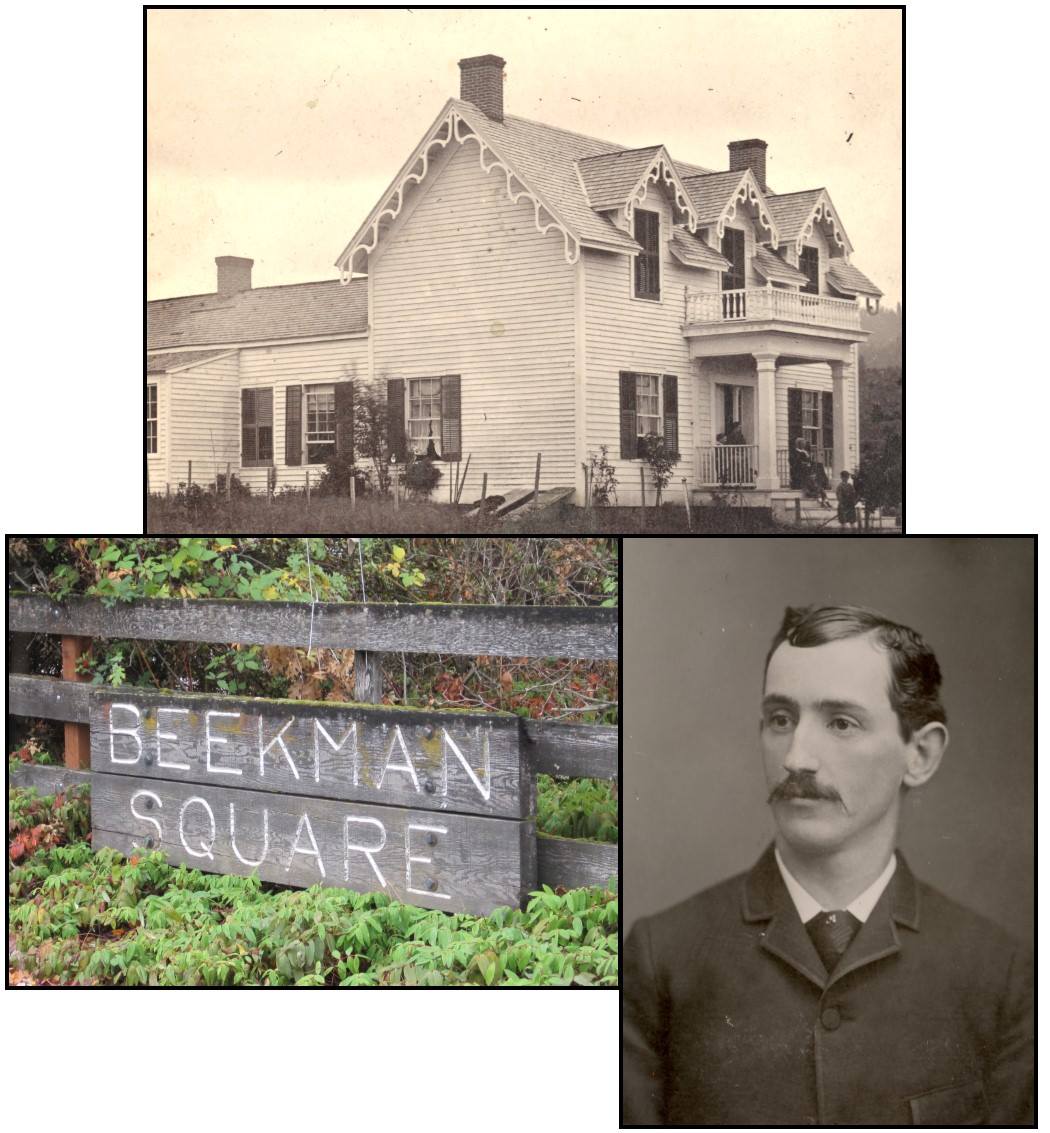
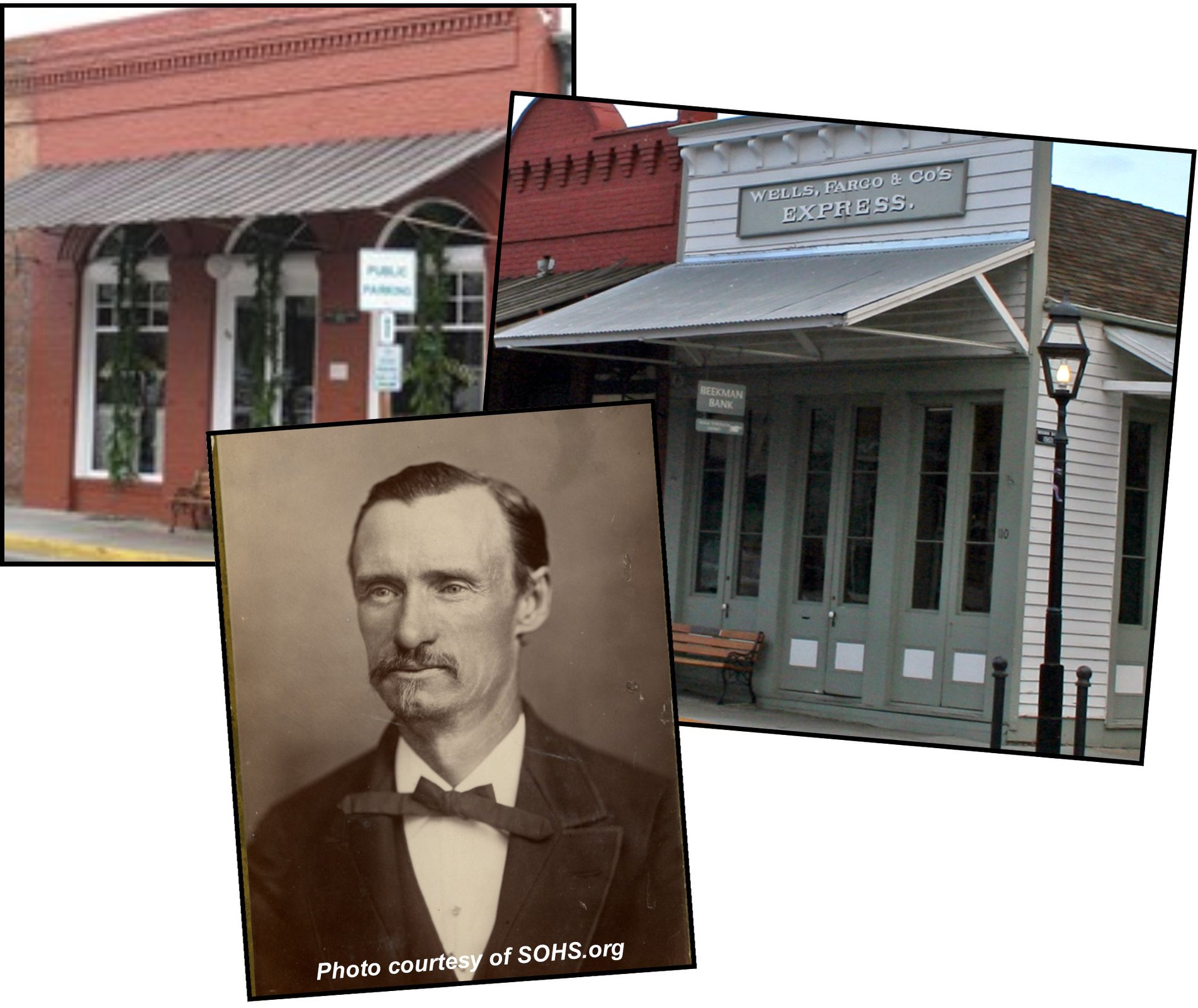
The 1863 C.C. Beekman Bank was Jacksonville’s original Wells Fargo agency and the oldest financial institution in the Pacific Northwest.  But surely there were financial institutions before 1863!  What gives? 

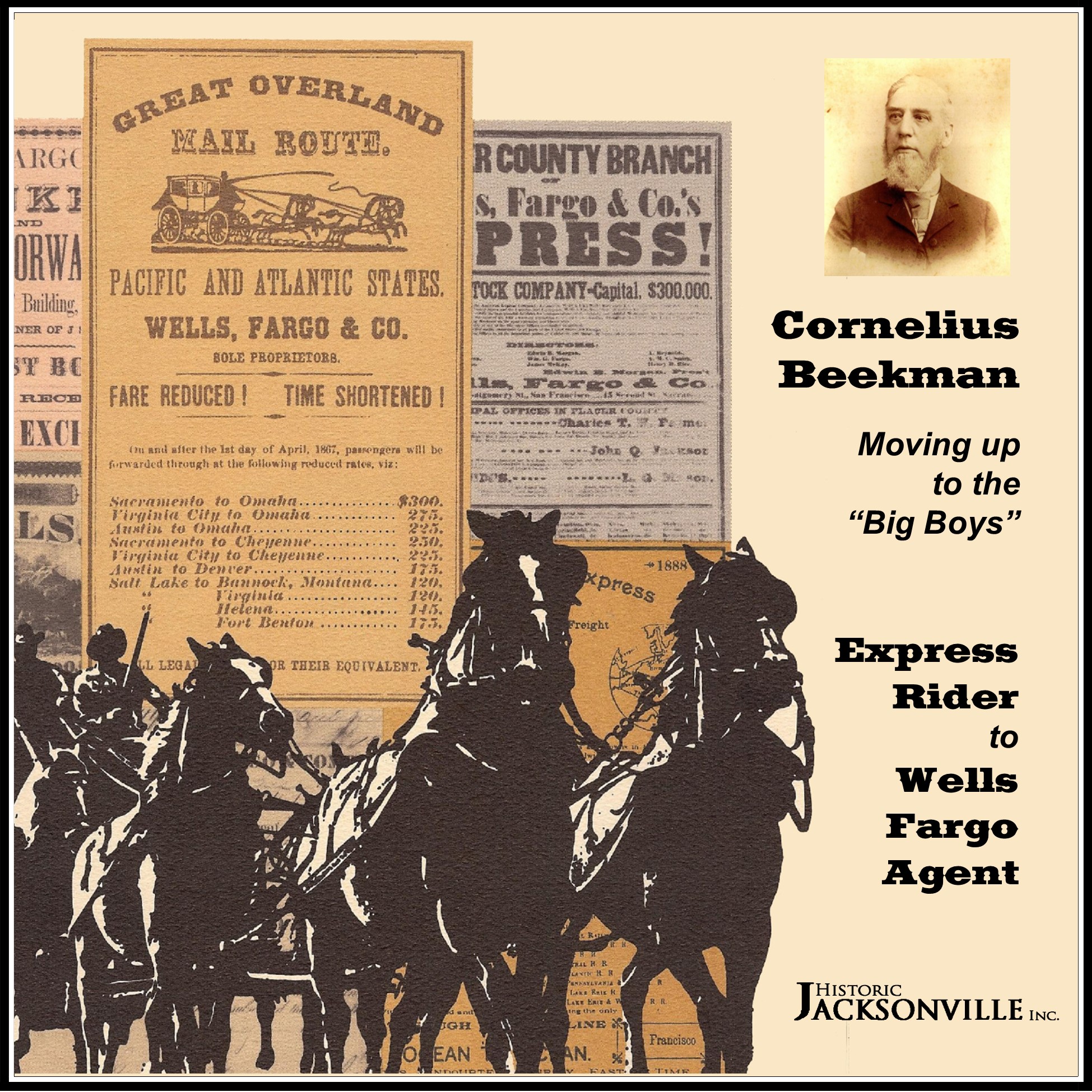
Cornelius C. Beekman came to Jacksonville in 1853 as an express rider for Cram, Rogers & Co., transporting goods and gold between Jacksonville and Yreka, and riding the 67 miles over the Siskiyous 2 to 3 times a week. When the company failed in 1856, he bought their stables and corral for $100 and established Beekman’s Express. He also bought a safe to house gold dust between trips, and that made him a “financial institution.”

Beekman continued riding the Jacksonville-Yreka route 2 or 3 times a week until 1863 when he became the Wells Fargo agent, a relationship he maintained until 1905.  U.S. government parcel post did not exist until World War I.  If you had anything other than mail to ship, it went by an express service.  Beekman’s Express had been one of many small point-to-point express companies.  Wells Fargo was one of the “big boys,” and as a Wells Fargo agent Beekman had an assured income for the duration of the relationship. 

Only one other large express company that originated in the 1850s remains in service today—American Express.  Ironically, Henry Wells and William G. Fargo were 2 of the 3 individuals who merged their New York express companies in 1850 to create American Express.  Wells and Fargo created Wells Fargo in 1852 when the other company directors refused to extend American Express service to California, and Wells Fargo became the main express company on the West Coast, later expanding into the rest of the country and Europe.

Cornelius C. Beekman – Santa

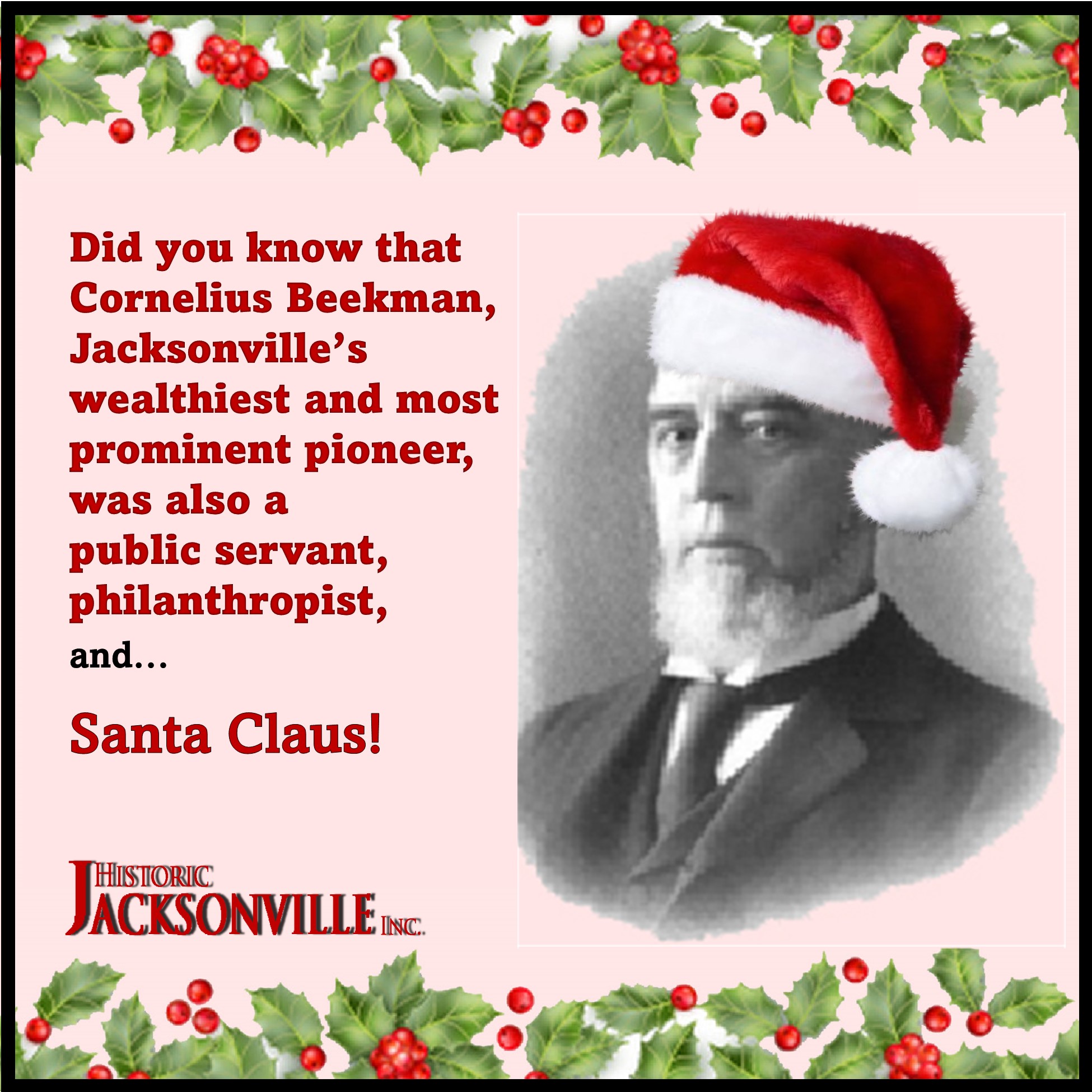
Did you know that Cornelius C. Beekman, probably Jacksonville’s wealthiest and most prominent pioneer, was also a benevolent Santa Claus? 

You may know that Beekman was a prominent businessman and public servant. He had banking, mining, and real estate interests, as well as multiple other investments. He also served on the town’s school board; was a town trustee and mayor; donated land for churches, schools, and a library; was drafted as a candidate for Governor of Oregon; and served as a Regent of the University of Oregon. 

But Beekman looked at the “smaller picture” as well as the bigger one. When two local boys wanted to be part of the Presbyterian Church’s Christmas Eve celebration but lacked appropriate attire, a 1913 newspaper noted that Banker Beekman bought both of them new suits so that they could participate in the Christmas pageant.  We can’t speak for their recitations, but they certainly looked “spiffy”!

Cornelius C. Beekman Update

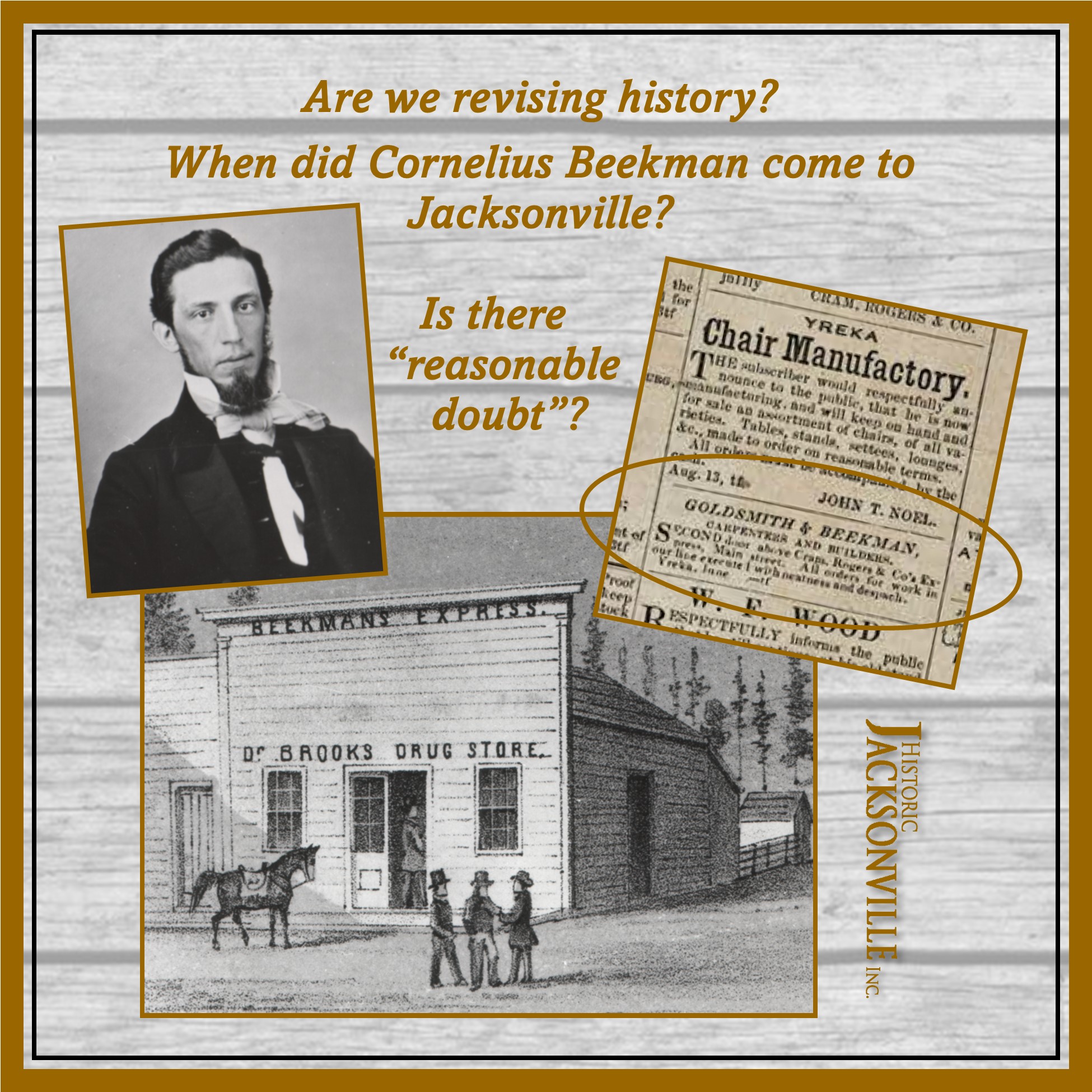
For three years before Cornelius Beekman opened the gold dust office that preceded the bank we know today, he was an express rider for Cram & Rogers, carrying mail, parcels, newspapers, and gold over the Siskiyous between Yreka and Jacksonville.  We’ve thought for years that Cornelius Beekman moved to Jacksonville in 1853 when he became an express rider between those 2 towns, but it seems he may have remained based in Yreka.  When Cram & Rogers went belly up in 1856, he purchased his former employer’s Jacksonville horses and stable and opened Beekman’s Express. That appears to be when he moved to Jacksonville.

Why are we having this change of “heart,” or in this case “history”?  Because more contemporary accounts have become available, and we have access to more facts.  1853 Yreka newspapers show Beekman advertising his carpentry and building skills in conjunction with a partner named Goldsmith.  Beekman had trained as a carpenter before coming West and periodically fell back on his trade as an income source.  We also have access to Jacksonville’s Pioneer Census records and Beekman’s name does not appear until 1856.

Is this sufficient “evidence” to “prove” that Beekman did not move to Jacksonville until 1856?  No, but it certainly raises “reasonable doubt” and causes us to rethink our timeline.  It may change the details, but it does not change either the bank’s footnote in history or the role Beekman played in turning a gold rush town into the hub of Southern Oregon.

Cornelius C. Beekman

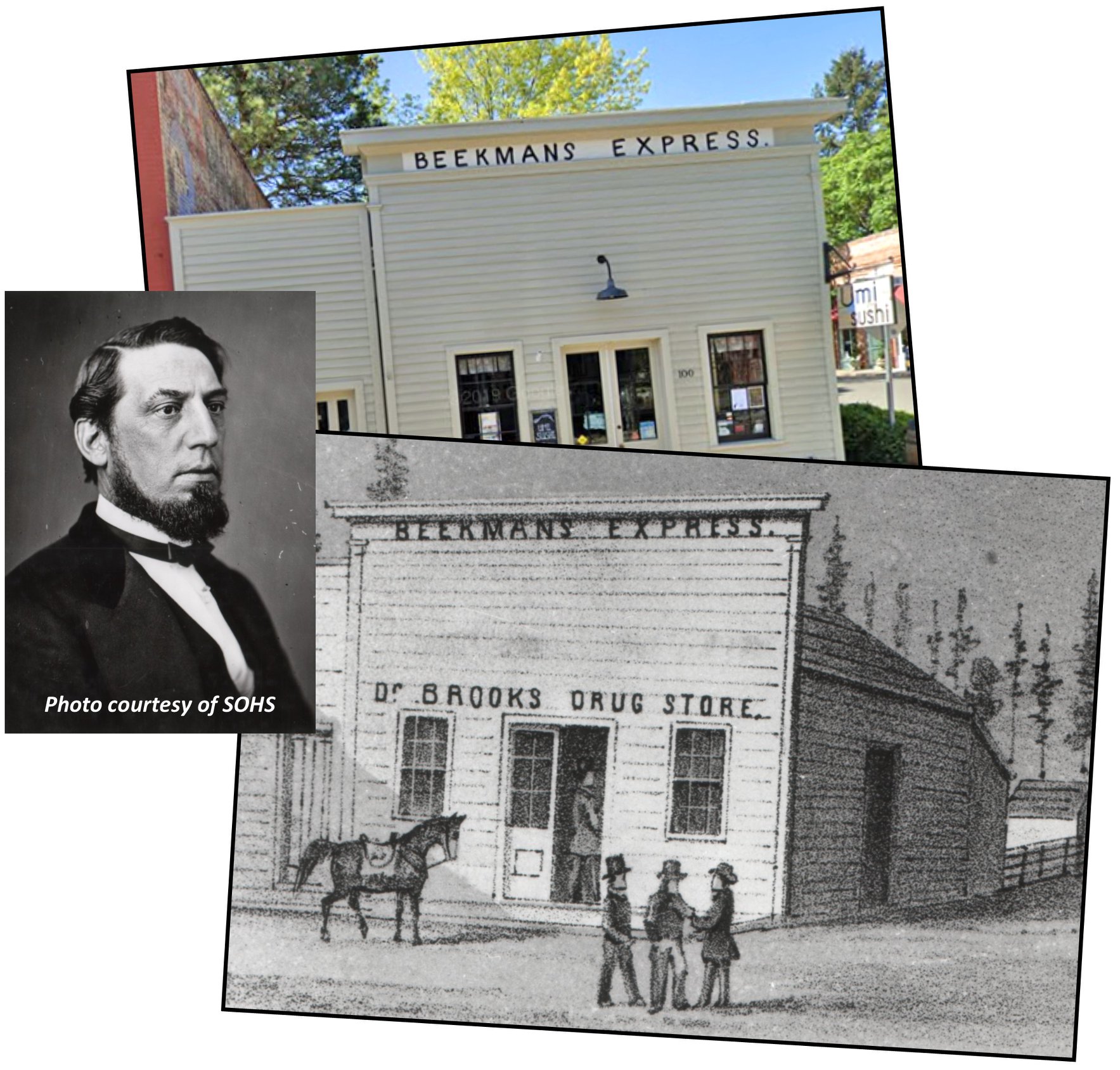
Cornelius C. Beekman came to Jacksonviille in 1853 as an express rider for Cram Rogers & Company, carrying gold, mail, and newspapers over the Siskiyous to Yreka 2 to 3 times a week—a 67 mile journey by horse or mule. When Cram Rogers went belly up in 1856, he purchased their horses and corral and opened Beekman’s Express at the southwest corner of California and 3rd streets in Jacksonville, a site he shared with Dr. Charles Brooks’ Drugstore.

A large safe that he bought to store the miners’ gold made his office the oldest financial institution north of San Francisco and the oldest bank in the Pacific Northwest. When he became a Wells Fargo agent in 1863, he constructed his second bank building cattycornered across the street. Shortly thereafter, his old building became the Express Saloon until 1868, then the Pioneer Bit House which was subsequently renamed The Eagle Sample Rooms. The original building was destroyed in the fire of 1874. The “Express Office” now at that location is a reconstruction.

Carrie Beekman

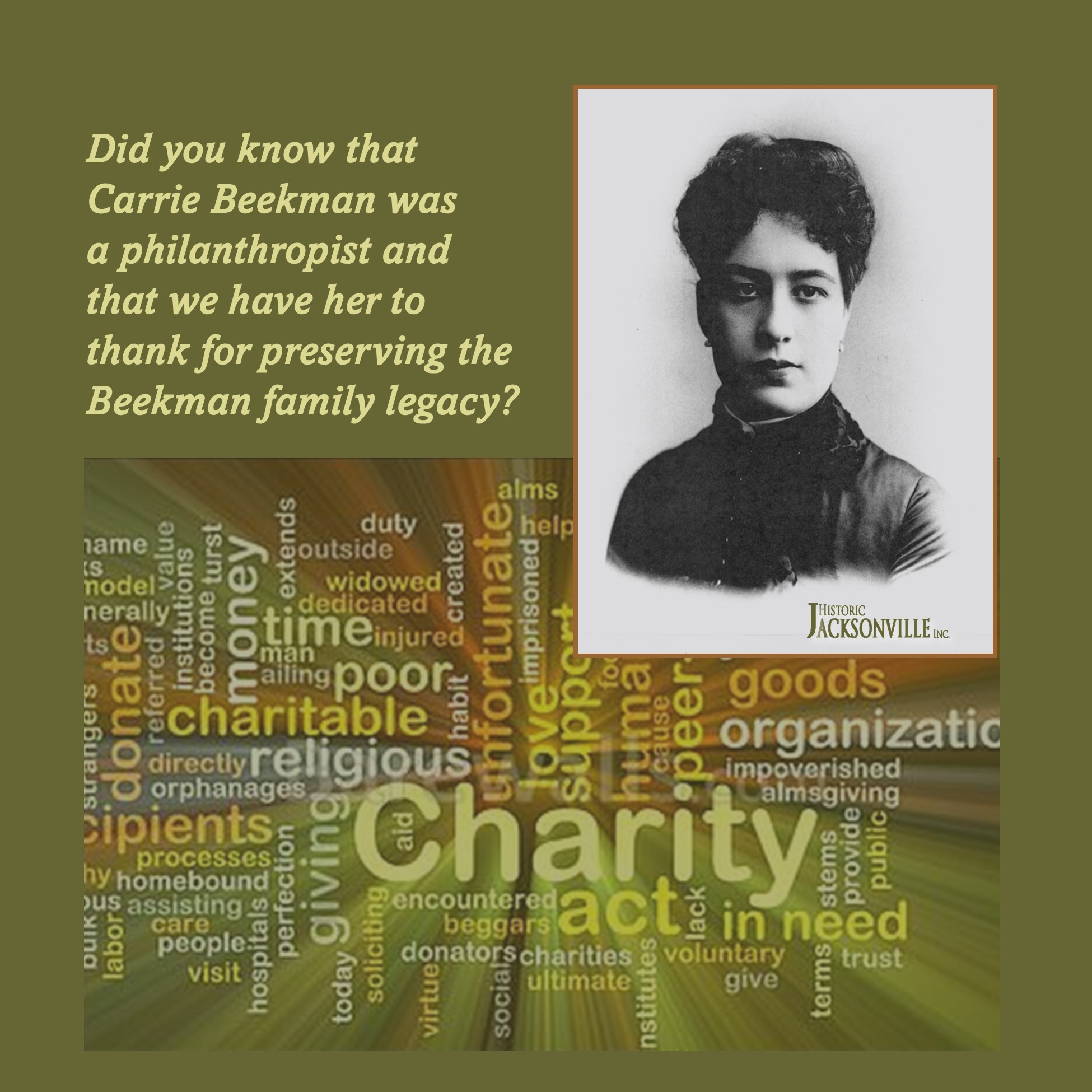
You may be aware that Cornelius Beekman, Jacksonville’s wealthiest and most prominent pioneer, was a philanthropist, but did you know that his daughter Carrie followed in his footsteps?  March is Women’s History Month so Historic Jacksonville, Inc. is sharing the stories of local women, many of them previously untold. 

You may have heard how Cornelius gave money to build schools and churches.  Carrie initially did things on a more personal level, even after she moved to Portland in 1931.  For example, she financially cared for those who worked for the Beekman family until her death in 1959; she funded a “heating plant,” “pew cushions,” “well repair,” and periodically the minister’s salary at Jacksonville’s historic Presbyterian Church.  

But Carrie Beekman is also the one who preserved the family history.  While her brother Ben saw that the 1863 Beekman Bank remained intact as a museum during his lifetime, it was Carrie who deeded the Bank and all its contents to the Oregon Historical Society following Ben’s death, along with $10,000 in Ben’s memory.  It was Carrie who donated the Jacksonville Reservoir to the City of Jacksonville and the property between the Presbyterian Church and the manse to the Church.  It was Carrie who set aside the bulk of her estate for the University of Oregon to establish the Beekman Professorship of Pacific and Northwest and History in honor of her father and brother.  It was the first endowed chair at the University.  And it was Carrie who deeded the Beekman House and its contents to the University of Oregon upon her own passing. 

Carie Shelton

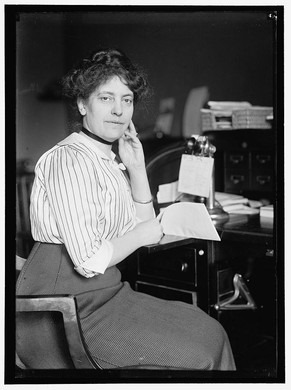
Did you know that Oregon had the nation’s first female governor? And it was 3 ½ years before Oregon women gained the right to vote? The woman was Carrie (aka Carolyn/Caralyn) B. Shelton. She was acting governor of Oregon for one weekend – 9 a.m. Saturday, February 27, through 10 a.m. Monday, March 1, 1909. It seems that the outgoing governor, George Earle Chamberlain, had been elected to the Senate and had to leave for Washington, D.C., before his term was over if he was to make it to D.C. in time to be sworn in with the rest of the freshman class of senators. Arriving late would make him the last man on the roster in terms of seniority. The incoming governor, Frank W. Benson, had gotten sick and couldn’t assume office early. So Chamberlain left his 32-year-old secretary in charge. For a weekend, Shelton, a woman who couldn’t legally cast a ballot, possessed the power to issue pardons, veto bills and sign executive orders. And in another wrinkle to the story, in 1926 Shelton married Chamberlain, her longtime boss and mentor, making them the first and only pair of former governors in U.S. history to wed.

Carl B. Rostel

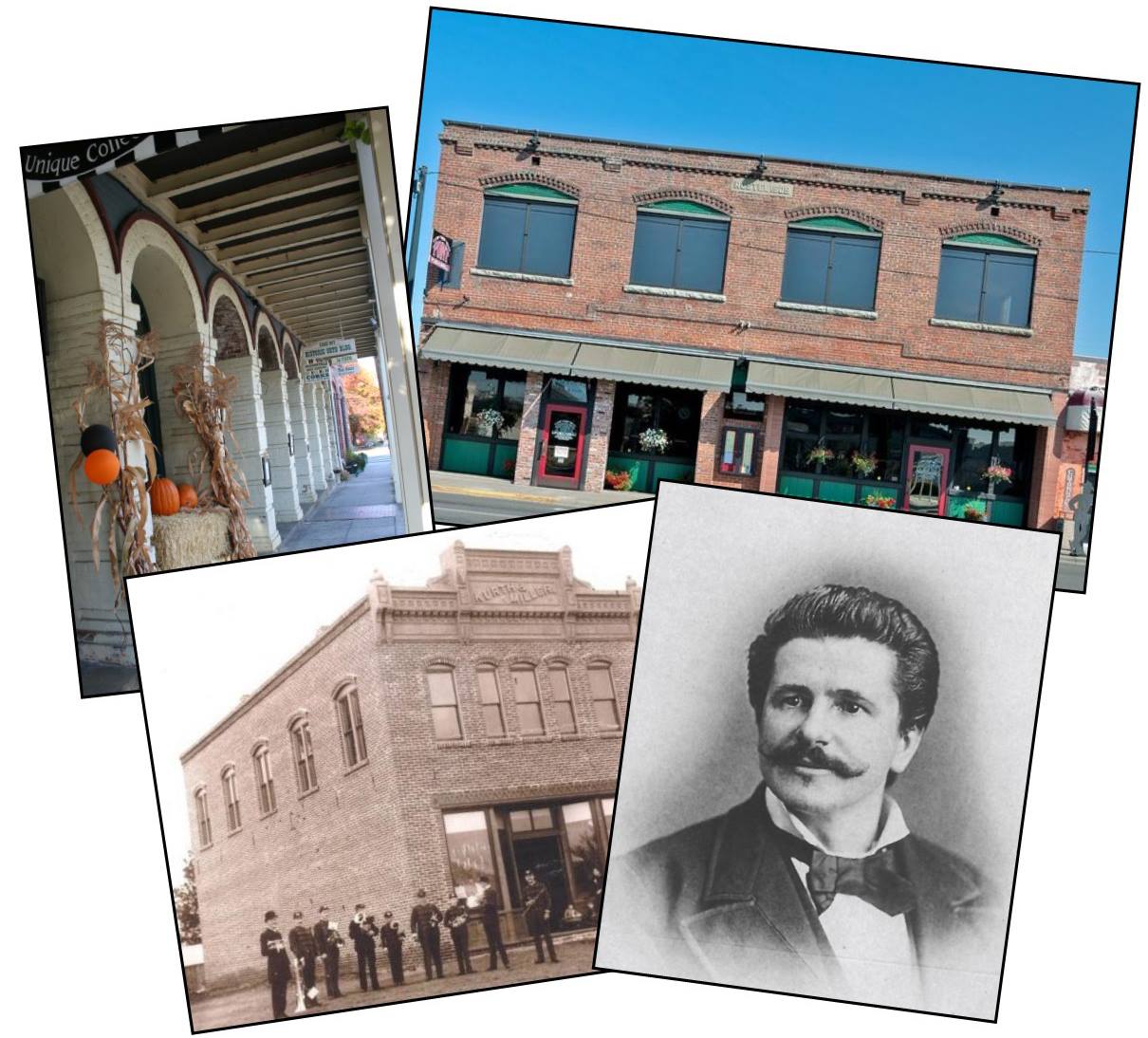
Carl Berthold Rostel, born in 1849, was an immigrant from Germany who found his way to the Rogue Valley. According to The Oregon Sentinel advertisements from the 1880s, he had been an “Asst. Surgeon of the German Army.” Here he chose to be a “Professional Hair Cutter” and became known as “The Popular Barber and Hair Dresser” in the Orth Building on S. Oregon Street in Jacksonville. An 1881 issue of the Sentinel noted that “Rostel shaves in the highest style of the art” and is “one of the best barbers on the coast.” C.B. Rostel went on to become a prominent Rogue Valley businessman, owning several properties in the Valley, including a saloon, a variety shop, a barber shop in Medford, and the Kurth & Miller building in Central Point. After using the latter for a “store and business offices” for a decade, Rostel remodeled and doubled the size of the building in 1909, and the “Rostel 1909” building was born. Today it’s the home of The Point Pub & Grill.

Benjamin F. Dowell

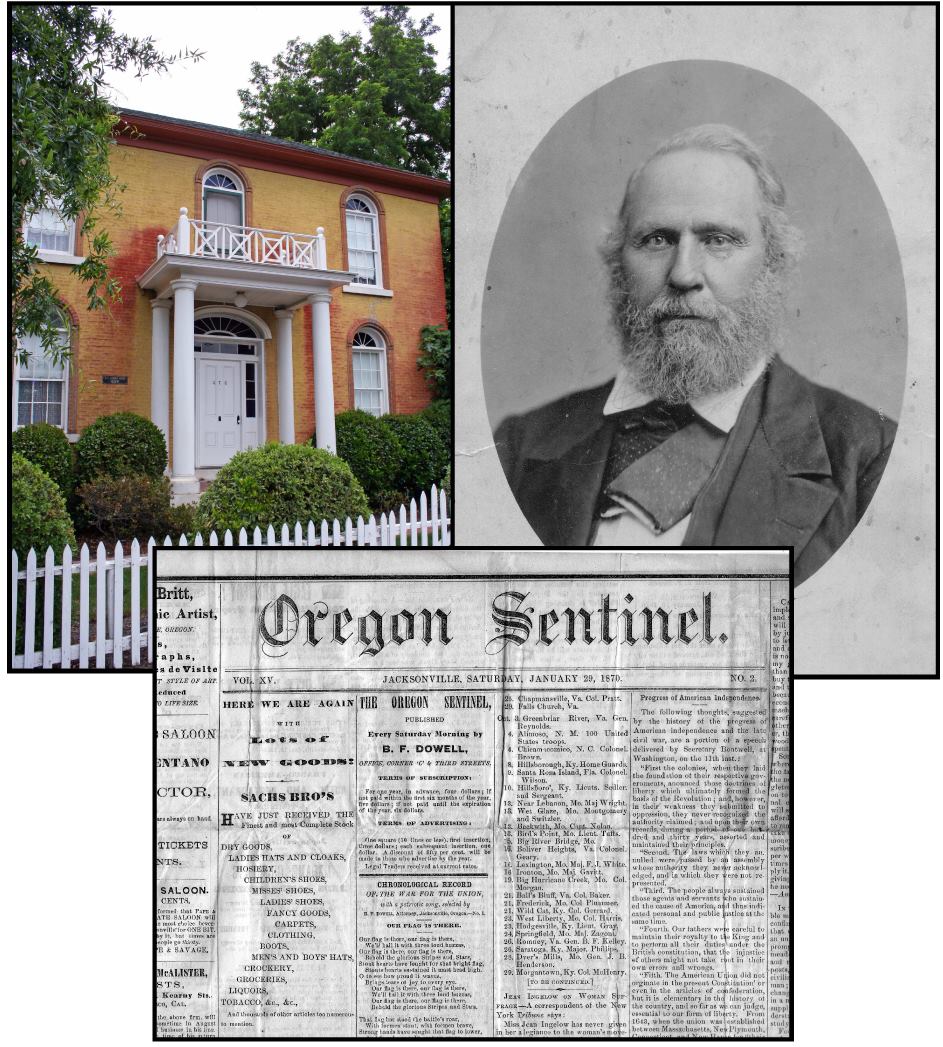
The Italianate style home at 475 N. 5th Street was built for Benjamin Franklin Dowell, named for his grandmother’s uncle, Benjamin Franklin. Dowell served as prosecuting attorney for Oregon’s 1st Judicial District and as U.S. District Attorney. For 14 years he owned the Oregon Sentinel newspaper, the first newspaper in the Pacific Northwest to support the abolition of slavery and the first to nominate Ulysses S. Grant for president. The is one of the earliest Italianate style homes built in Oregon. Constructed in 1861, it may also have been the first home in Jacksonville to be built of brick. Most homes of the period had wood burning stoves for heat, but this distinctive home has 4 fireplaces—one of black onyx and 3 of marble. The marble probably came from Dowell’s own marble quarry on Williams Creek. That same marble was also used for the porch steps and all the window sills.

Ben Johnson

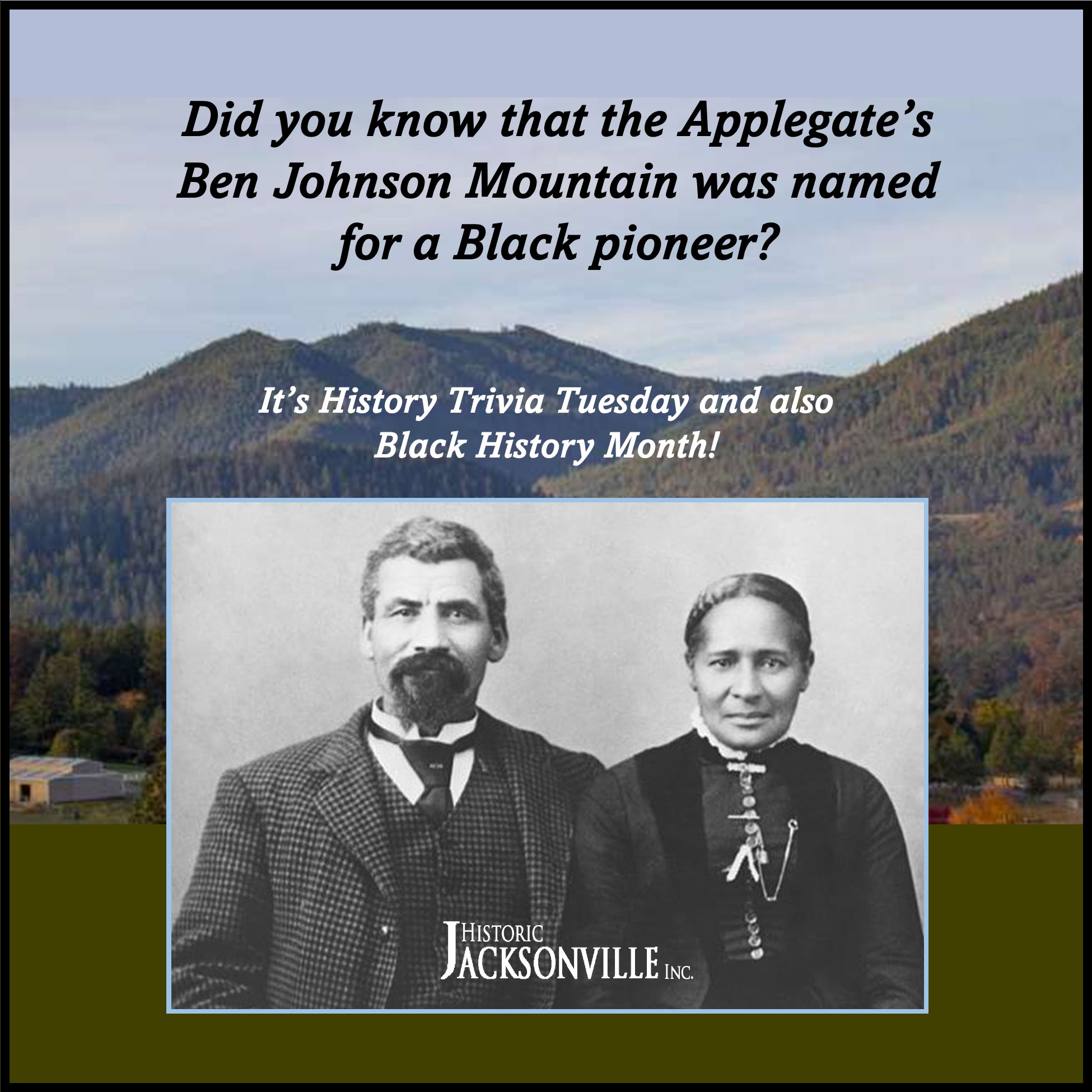
Did you know that Ben Johnson Mountain in the Applegate is named for a Black pioneer?  Historically, Southern Oregon has had only a small population of Black residents so it’s remarkable that a local mountain landmark is named for a Black man!  In fact, when Ben Johnson lived near Ruch in the 1860s, the state’s “exclusion laws” made it technically illegal for a Black to reside in Oregon.

Johnson had been born into slavery in Alabama in 1834. In 1853, he had crossed the plains with an ox team, making his way to Uniontown, Oregon as a freed slave. Uniontown, founded by Theodoric Cameron, was at the mouth of the Little Applegate River during Southern Oregon’s 1800s mining era.  Johnson worked for Cameron but by 1868-69 he was also prospecting and had built his own blacksmith shop at the base of the mountain that now bears his name. Johnson was known as a skilled blacksmith and accommodated miners by sharpening their tools. He could read and write and was respected by the community.

It appears that part of the West’s attraction for Johnson was another freed slave, Amanda Gardner.  She had also come west in 1853 with a Deckard family who had settled in the Albany area.  Although freed, Amanda had cared for her former mistress until her death. By 1870 Johnson had married Amanda and moved to Albany where he continued his blacksmith trade.  

Johnson’s history, and that of the mountain that bears his name, had been lost for over 100 years.  Dedicated research by Jan Wright, Southern Oregon Historical Society Archivist, uncovered Ben Johnson’s story. Today you can hike Ben Johnson Mountain, a 4,500 foot peak in the Rogue River National Forest portion of the Siskiyous, about 10 miles southwest of Jacksonville.  A trail head that can be reached from the Applegate’s Cantrall-Buckley Park leads to a steep 1.1-mile trail with aerial views of the Rogue Valley and eye-catching cityscapes.

We would like to thank Jan Wright, Southern Oregon Historical Society Archivist, for the research that uncovered Ben Johnson’s history. 

Auguste Petard

In 1896 a group of French settlers arrived in Jacksonville intent on establishing a large-scale grape and wine industry. One of these individuals, Francois Loran, was granted the parcel of land located at 860 Hill Street where he constructed the initial box house that still stands on the site. In 1918, the property was acquired by Auguste Petard, another Frenchman and winemaker. Petard had come to America in the late 1890s to make his fortune mining gold—only to find he was 50 years too late. He was headed for the Yukon when he stumbled across Jacksonville.

He purchased a claim at the head of Rich Gulch and again tried mining—constructing the irrigation ditch that bears his name. He mined enough gold to acquire additional property including the Hill Street site, and again turned to grape growing and winemaking. Petard, with his wife Marie and their sons, farmed about 20 acres, selling most of their grapes to other winemakers while producing enough vin ordinaire for the family. However, Petard was again a victim of timing. The 1919 Volstead Act prohibited the production and consumption of alcohol, and in 1922, the Women’s Christian Temperance Union accused the Petards of making and selling “bootleg wine.”

The sheriff confiscated 600+ gallons of wine (over $4,000 worth) and poured it out. The 79-year-old Auguste was fined $75 and barely escaped a jail sentence. The Petards had to content themselves with growing table grapes—although there may have been a barrel or 2 of wine produced on the side….

August Singler

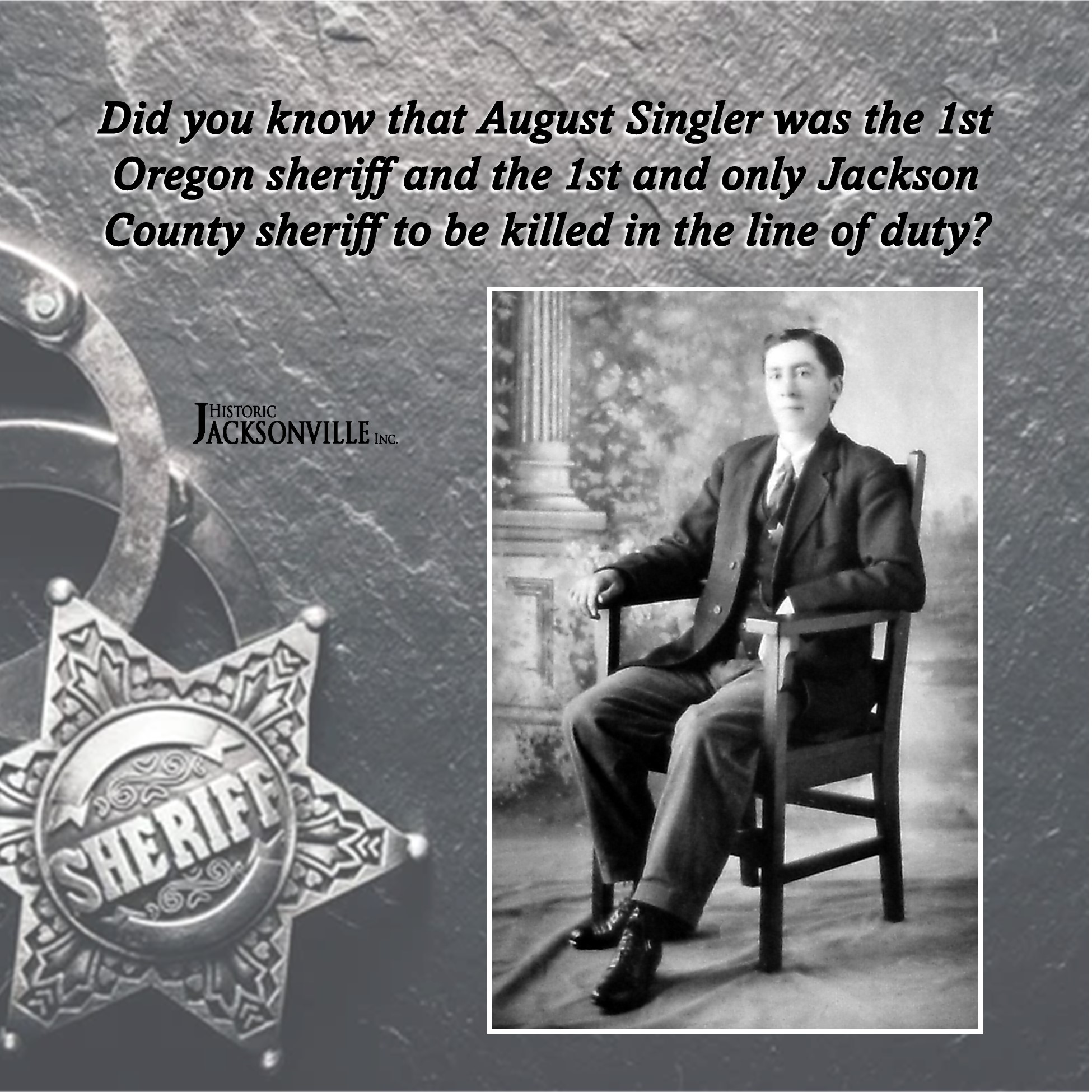
Memorial Day has Historic Jacksonville, Inc. thinking about others who have sacrificed their lives for the public good.  Did you know that August Singler was the first Oregon sheriff and the first (and to date only) Jackson County sheriff to be killed in the line of duty? 

Shortly after being elected sheriff in November 1912, Singler, his wife Rose, and their brood of 8 had moved into the sheriff’s quarters at the corner of East 6th and D streets in Jacksonville behind the 1883 Jackson County courthouse. Prior to Singler’s election, he had gained a reputation as a dedicated constable who did his duty no matter what.  He had introduced the art of fingerprinting to Jackson County and had been the first lawman in the area to use bloodhounds. His exploits were often reported in the local newspapers. 

On April 22, 1913, Singler was serving a warrant on a man name Lester Jones who was hiding out in a rural cabin about a mile south of Jacksonville.  Jones had been accused of theft a year earlier but had escaped after disarming the town marshal who tried to arrest him.  When Singler opened the cabin door, Jones shot the sheriff in the chest.  A second bullet smashed Singler’s right hand.  Although right-handed and mortally wounded, Singler switched hands and shot Jones six times, killing him.  Surgeons tried to save Singler, but the shot proved fatal.  Singler died the next morning.  He was 36 years old.

On April 25, Medford stopped all commerce for Singler’s funeral.  The procession from the church to the IOOF/Eastwood Cemetery was over 12 blocks long.

Singler may be gone, but he has not been forgotten.  In 1993, Medford dedicated the August D. Singler Memorial Plaza between the Jackson County Justice Building and the county jail.  One hundred years after Singler’s death, U.S. Rep. Greg Walden recognized Singler’s service and sacrifice with an entry in the “Congressional Record.”

Atenicia Riddle Merriman

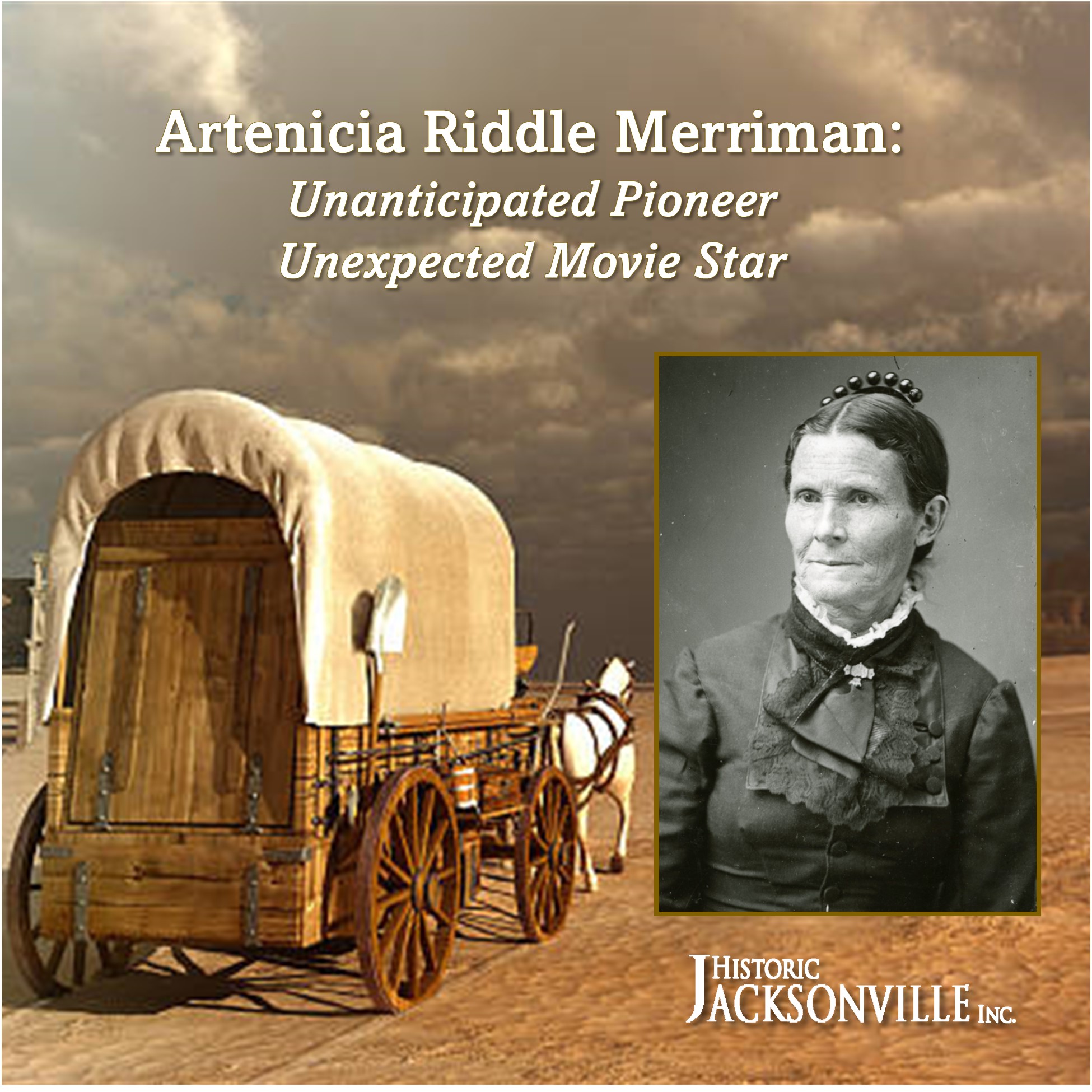
“Some of us wait for a “Plan B.” Artenicia experienced a “Plan B” life becoming an unanticipated pioneer and an unexpected 85-year-old movie star.

In 1851, Artenicia Riddle was happily settled in Springfield, Illinois, married to John Chapman, boasting a 1-year-old son when her husband suddenly died—5 days before her parents were leaving for Oregon!  As a 21-year-old widow with a baby, she had few choices so scrambled to gather provisions and join them in the journey across the Oregon Trail.  Her father William Riddle settled what we know as Riddle, Oregon.

In 1854, Artenicia married widower William Merriman, a blacksmith, wagon maker, and agriculturalist.  Those skills were much in demand in Southern Oregon and the couple moved to the Rogue Valley in 1857, settling 2 miles north of Jacksonville, where they raised 15 more children. 

When the Medford Commercial Club learned that the Jackson County Exhibit at San Francisco’s 1915 Panama Pacific Exposition was considered “bland,” they commissioned a film to showcase the virtues of Southern Oregon. The story, highlighting the social and cultural life of the valley, starred Broadway actress, Grace Fiero, wife of wealthy local orchardist Conrad Fiero (owner of Mon Desir).  In the film, Grace visited some of the Valley’s pioneers.  Artenicia was one of them, and she bought a new bonnet for the occasion. 

The film, the first feature film made in Oregon, had a brief run in Medford before being shown at the Exposition to wild acclaim!

Artenicia died 2 years later having experienced gas cook stoves, electric lights, and automobiles—far cries from the dutch ovens, tallow candles, and wagons of the pioneer times she talked about in Grace’s “moving picture.” 

Anna and Emma Von Helms

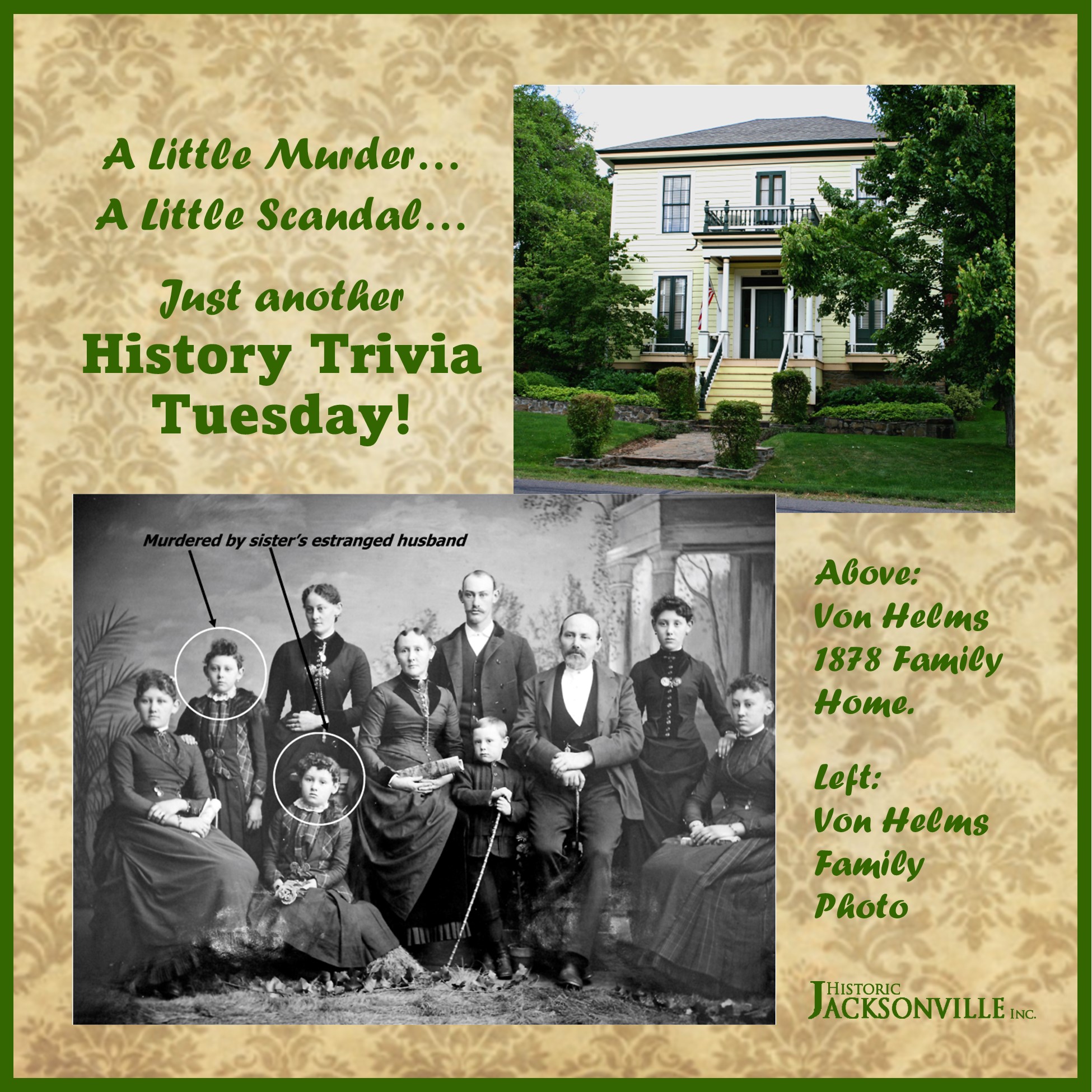
We knew that the Von Helms family, the original owners of Jacksonville’s 1860 Table Rock Billiard Saloon and the lovely 1878 Italianate style home at the corner of South Oregon and Pine streets, suffered several family tragedies.  Three daughters died in epidemics.  Another was murdered, but we’ve only recently come across more details.  Not that we would gossip, but….

It seems that daughter Anna had married Frederick B. Martin, a salesman for the Pacific Biscuit Company.  He was their Portland representative; she ran a fashionable Portland boarding house, the Ella, at the corner of Ella and Washington streets.  Anna’s older sister Emma helped run the boarding house. 

Reportedly, the Martins’ marriage was “stormy.”  When Martin was “discharged” from the biscuit company in 1906, he abandoned Anna and left for California.  When he returned to Portland at the end of the year, Anna refused to live with him or reconcile.  Martin blamed his sister-in-law Emma for interfering.

On January 6, 1907, Martin went to the Ella and gained admission to his wife’s apartments.  There he shot both Anna and Emma then went to the basement where he killed himself.  Anna was wounded; Emma died.  What transpired before the shooting is unknown since Anna was in hysterics.

Anna eventually remarried.  Both Anna and Emma are buried in the Helms family plot in the Odd Fellows section of Jacksonville’s Pioneer Cemetery.

Alice Applegate Sargent

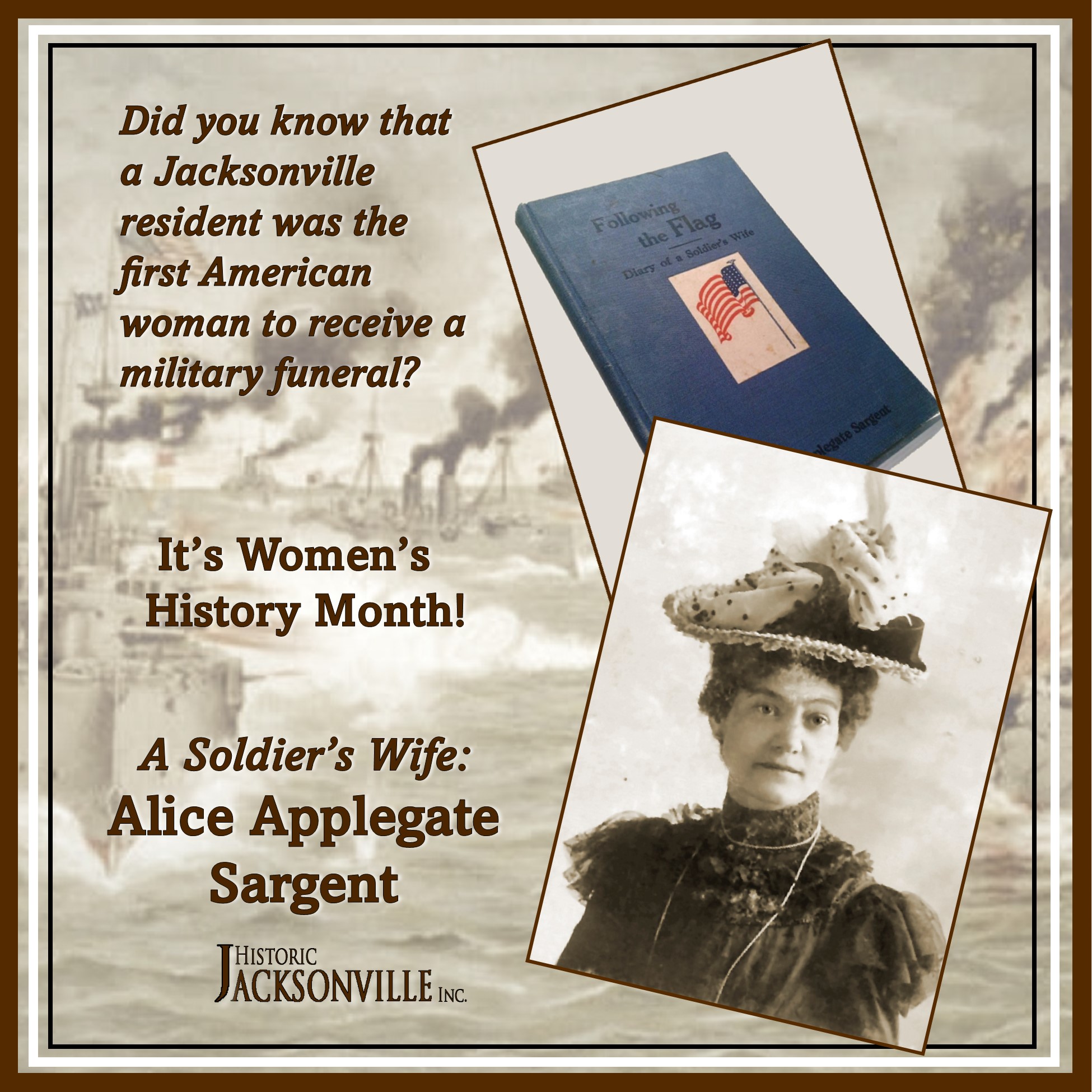
Did you know that Alice Applegate Sargent was the first American woman to receive a full military funeral?  Her name should sound familiar. She was the daughter of Lindsey Applegate, who with his brother Jesse, created the Applegate Trail. 

Alice led an unconventional life.  After growing up in the toll house on the first toll road over the Siskiyous, she married Herbert Howland Sargent, a newly commissioned West Point graduate.  As a military wife, she accompanied Herbert on all his assignments–forts, teaching positions, and active war duty in Cuba and the Philippines during the Spanish American War.  Herbert by then was Col. Sargent.  He authored 3 highly acclaimed books on military science and became friends with Theodore Roosevelt.  Alice chronicled her experiences in a memoir, ‘Following the Flag.” 

In 1911 the Sargents temporarily retired to Medford and became active in civic affairs. Herbert served as a Medford City Councilor, Alice as head of the Republican Club.  Then World War 1 recalled Herbert to active duty, and Alice, of course, followed him.

After the War, the Sargents retired to Jacksonville, becoming the 2nd owners of the Nunan House.  They called it Casa Grande.  They again became involved in civic affairs.

In 1920, Herbert led the initial attempt to stop the Jackson County seat’s being moved from Jacksonville to Medford, but it proved to be a Pyrrhic victory.  He died in 1921 so did not live to see it come to pass in 1927.  Herbert was buried in the Jacksonville Cemetery with full military honors.  Alice had the stone wall along Cemetery Road built in his memory.

When Alice joined her husband in the Jacksonville Cemetery in 1934, her years of service were also recognized by the Army.  The Spanish American and “Great War” veterans gave her a full military funeral—the first such rites ever accorded a woman.

Addison Helms

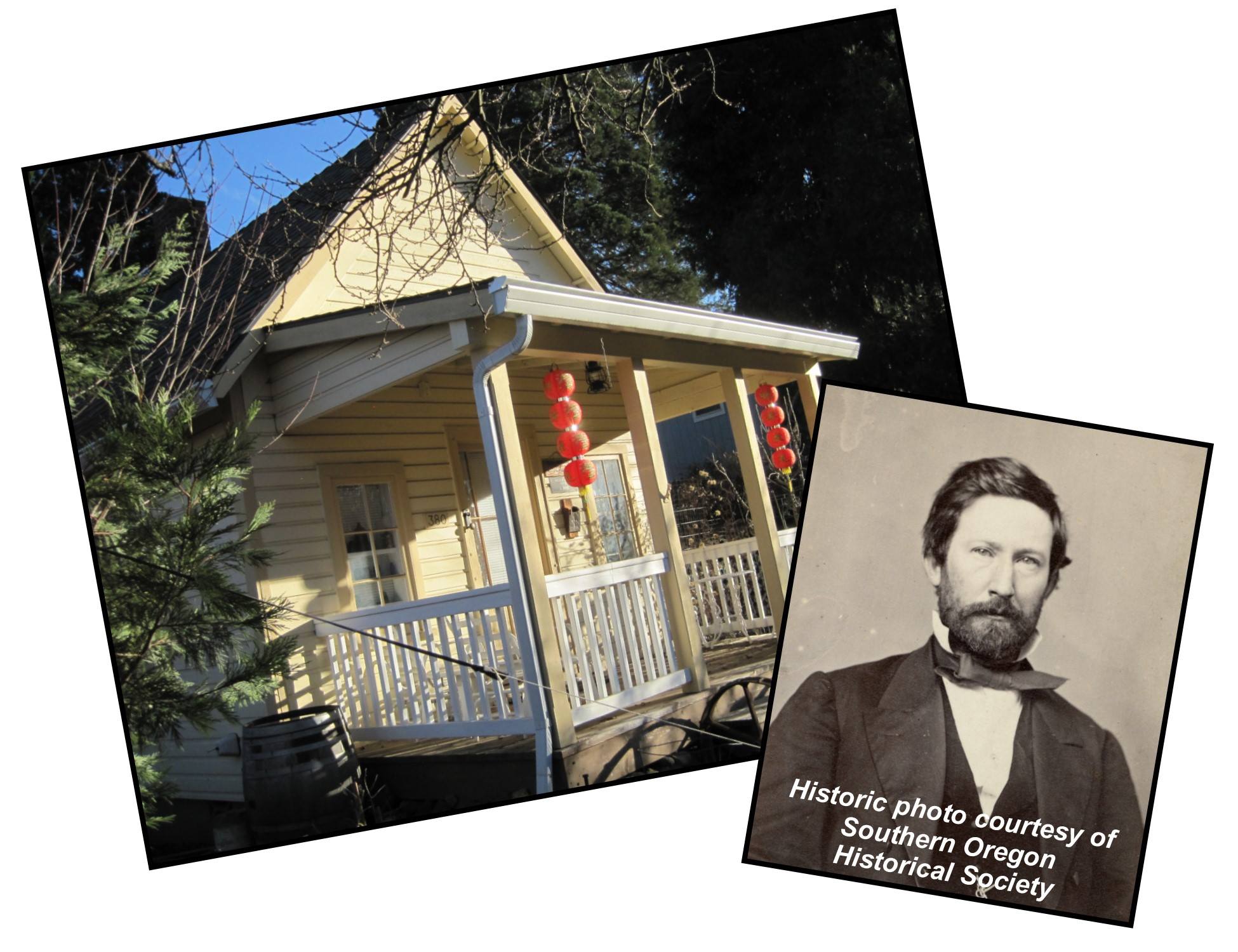
The original 1-story, wood-frame farmhouse portion of the home located at 380 North 4th was built around 1866 for Addison Helms, probably soon after his marriage to Ann Ross. Helms had acquired the northern half of the entire block from James Clugage, the original donation land claim owner of most of the Jacksonville townsite. Although Helms was a resident of Jacksonville for over 30 years, little is known about him. He and his wife had no children. He was twice elected Marshall of Jacksonville but does not appear to have been employed at any single occupation for an extended period of time. He is listed in the 1860 census as a “trader”; the 1870 census as a “horse jockey”; and the 1880 census as “unemployed.” At the time of his death in 1886, the Oregon Sentinel wrote: “A fortune passed through his hands since he came to Jacksonville but with unselfish generosity that was the ruling characteristic of his life, his only appreciation of fortune’s golden favors was measured by his unstinted liberality to all.”
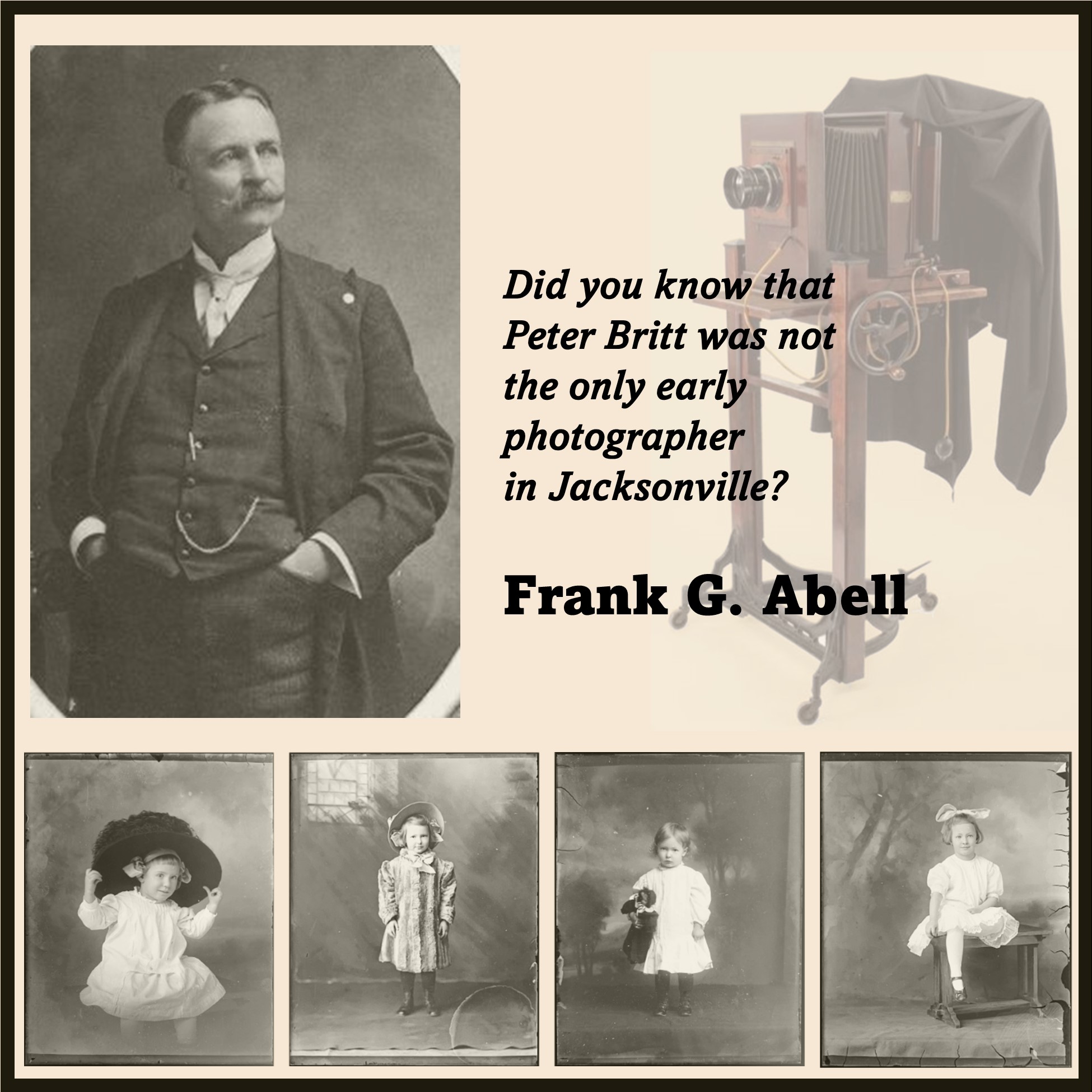
Frank G. Abell

When we think of early Jacksonville photographers, we automatically think of Peter Britt.  However, Britt was not the only local photographer.  In 1876-7 and again in 1883, Frank G. Abell, who, according to Jacksonville’s “Oregon Sentinel,” was “acknowledged to be the finest photographic artist in Portland,” was resident in Jacksonville.  In 1877, in partnership with J.O. Welsh, he “put up a building on the corner of California Street, opposite Wells, Fargo & Co.’s express office.” 
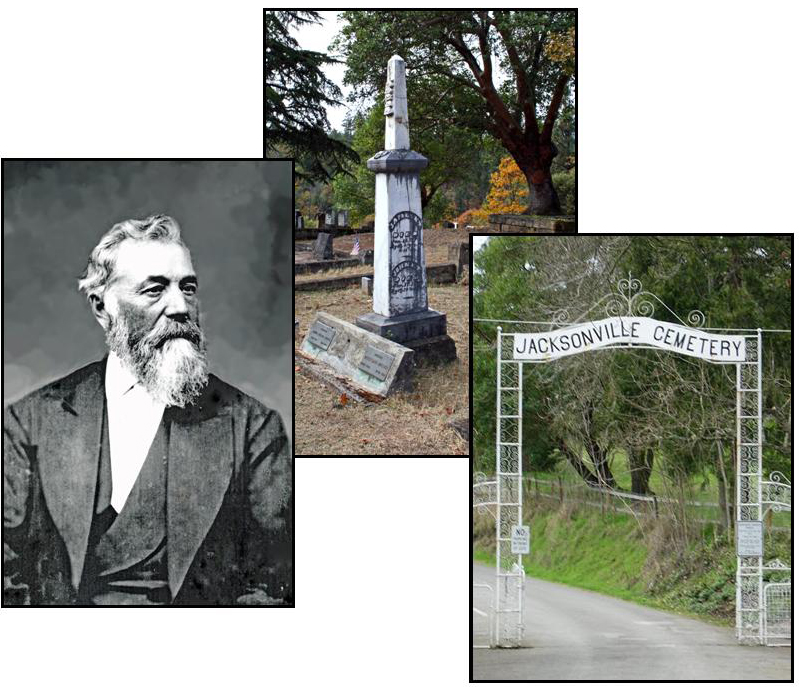
Abell was in many respects an itinerant photographer, living and working at various times in San Francisco, Stockton, Grass Valley, Red Bluff, Yreka, Ashland, Roseburg, Eugene, Corvallis, Portland, Tacoma, and of course Jacksonville.  He specialized in “outdoor work”—”residences, businesses, horses, cattle, etc.”—and children’s photos, using “an instantaneous dry plate process” for the latter.

In 1883, Abell leased Peter Britt’s photograph gallery.  The “Democratic Times” declared that Abell had “a reputation second to no artist on the coast” and that citizens could have their photographs taken in “the highest style of the art.”

Abell’s work was respected by his peers.  Over the years he won numerous first place awards for entries to the Oregon Mechanic’s Fair, was vice president of the Oregon delegation to the National Convention of Photographers in 1880, and was elected president of the Photographers Association of the Pacific Northwest in 1909.  Abell died in 1910 in Tacoma, Washington, and is buried in Portland.

Henry Belcher

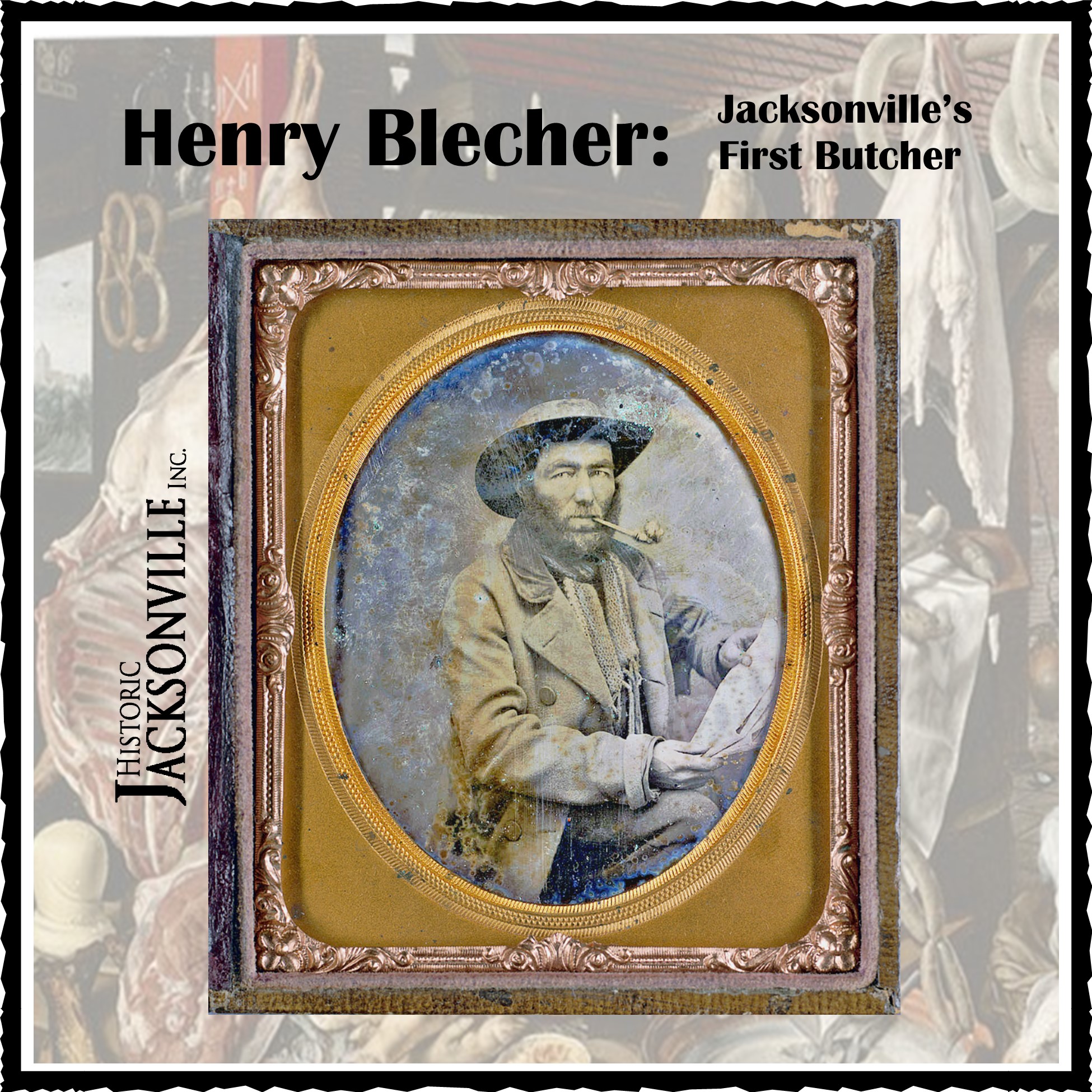
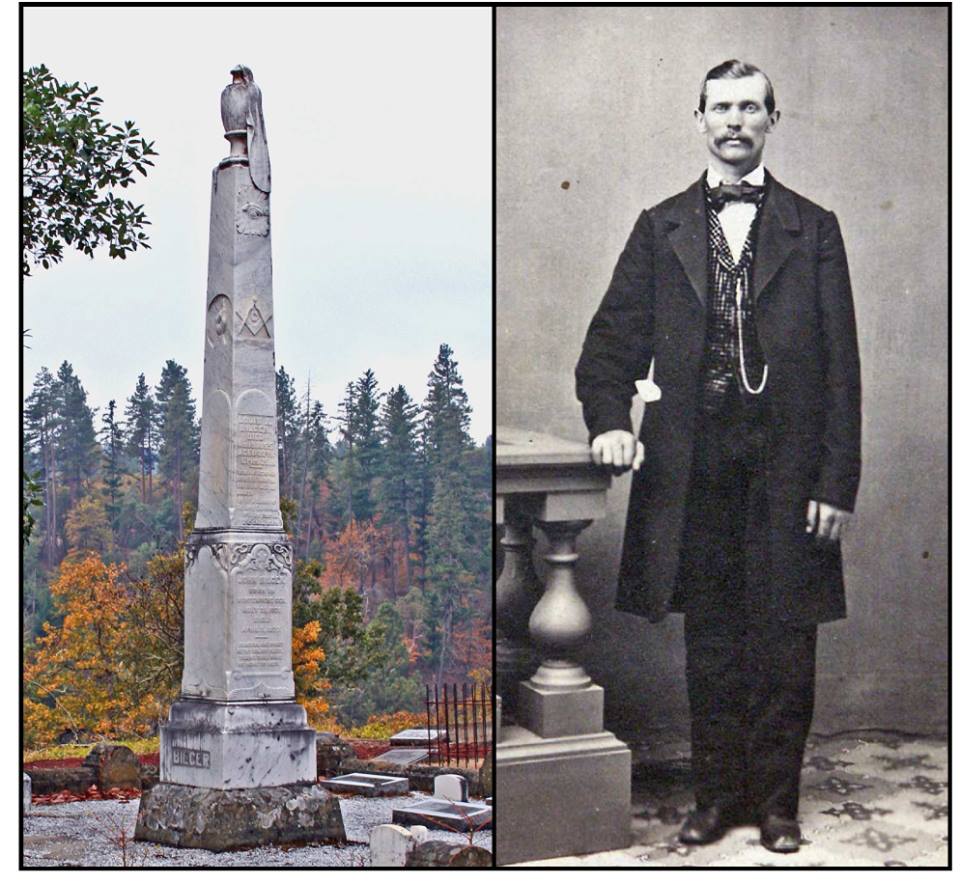
All of those 1852 gold miners had to eat, and, according to A.G. Walling, Jacksonville’s first butcher shop had opened within the year.  Described as “one of the finest” (although we can’t imagine there was that much competition), it was owned by Henry Blecher, a native of Prussia.  Born in 1822, he had immigrated to the U.S. in 1848.  Undoubtedly, like many others, he followed the promise of riches to the West Coast.  By the beginning of 1854, he was carrying “a heavy stock.”  That undoubtedly included venison, chicken, pork, rabbit, beef, and probably sausage—common staples of the time. 

The shop appears to have been located on South Oregon between California and Main streets, probably where the Orth building now stands.  In fact, he may have joined or sold out to John Orth in the butcher business.  We do know that he regularly provisioned the Jackson County jail, and in December 1875, he delivered 70,000 pounds of beef at $4.49 per hundred pounds to the Indian agent at Yainax, Oregon.  He was regularly listed as one of Jackson County’s heaviest taxpayers. 

We’re not sure who his suppliers were, but Blecher did own 1283 acres of land on Poorman’s Creek, 3 miles south of Jacksonville on the road to Sterling.  We don’t know if he farmed or ranched the property, but 90 acres housed a dwelling, barn, and orchard.  A fair amount of the acreage appears to have been forested since in 1891 he was hauling wood for the Rogue River Valley Railway between Jacksonville and Medford.  Blecher passed away in 1900 at the age of 77.  His property was inherited by his half brother and sister and by 1902 the Jacksonville Lumber Company had established a sawmill on the “old Blecher place.”

A few hard facts and a lot of “probablies and maybes.”  Keep in mind there was no newspaper in Jacksonville until 1854 and earlier accounts rely on personal diaries, hearsay published in Portland or Yreka papers, and memoirs from much later years.  Such are the basis of much of our early history….

“First White Child Born in Jacksonville” – OOPS

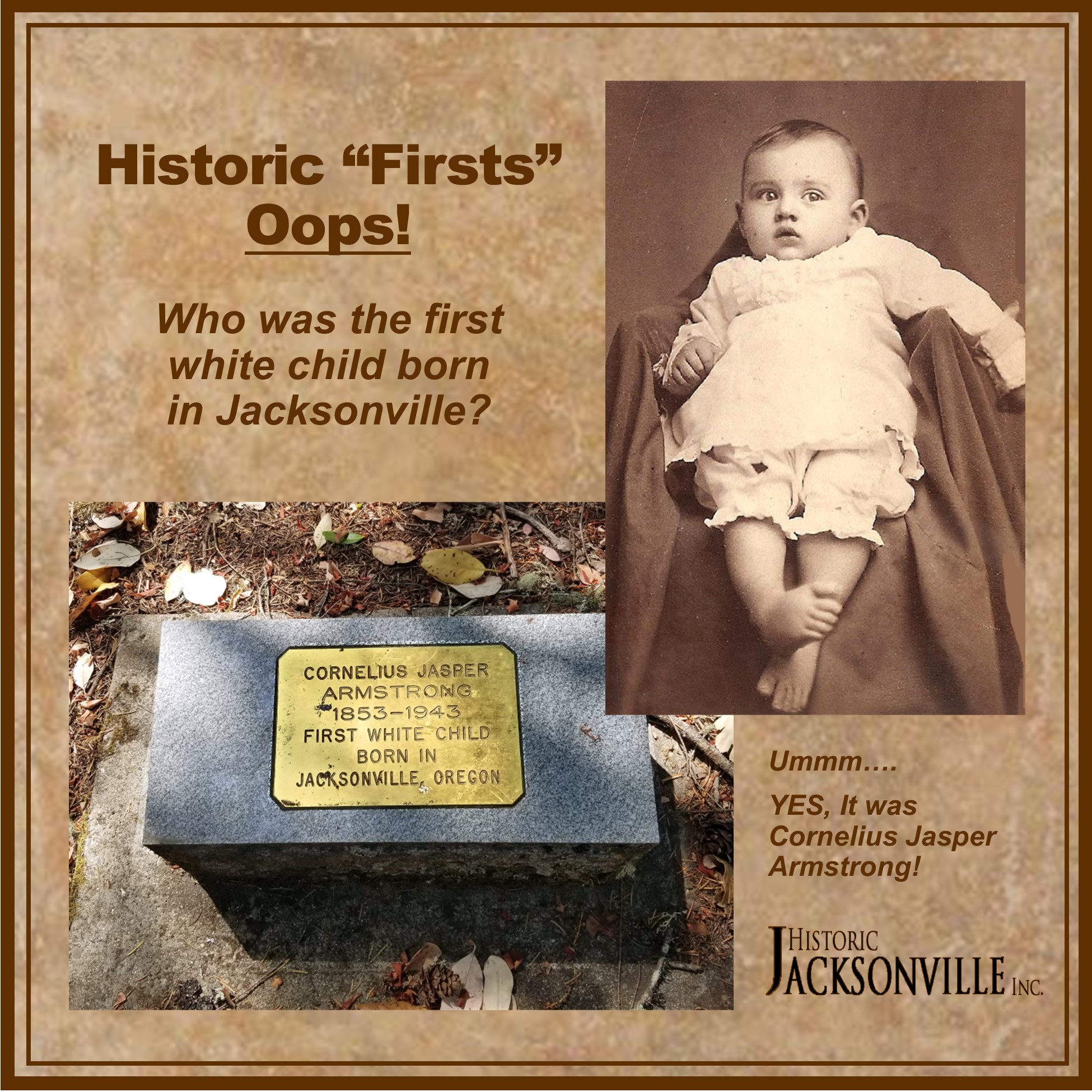
We’re eating crow.  As noted when we started on the subject of “firsts,” claims can be unreliable since “firsts” are usually awarded in retrospect and memories can be unreliable.  Information can also be missing.  And we just came across information that restores the title of “first white child born in Jacksonville” to Cornelius Jasper Armstrong! 

When Robert and Minerva Armstrong arrived in Jacksonville in October of 1852, Robert built a “pole cabin” on the site of what is now known as the “Judge Hanna House” at 285 South 1st Street.  That’s where Cornelius Jasper Armstrong was born on February 24, 1853.  It was later that spring that the Armstrongs traded the pole cabin and a hack to a Mr. Rogers for the donation land claim about 4 miles north of town that the Armstrong family occupied for the next 37 years.

So Cornelius Jasper was indeed born in Jacksonville! 

“First White Child Born in Jacksonville“

The title of “first white child born in Jacksonville” has been a subject of debate for over 150 years given there are multiple claimants.  The issue is clouded since “firsts” are usually awarded in retrospect and memories can be unreliable.  Also most individuals reporting on the subject credited any event happening in southern Oregon to Jacksonville because that was the closest town, the name known to them, and subsequently the County Seat. 

August 11, 1852, the earliest known birth date, belongs to Bruce Evans.  In 1903 he applied for a passport and listed his birthplace as Jacksonville.  There is a 2-year-old Bruce Evans listed in the 1854 Jackson County Territorial Census.  However, the only Evans family on record at that time lived near what is now Rogue River.  Beginning in 1851, Davis “Coyote” Evans operated a ferry on what became known as Evans Creek, a tributary of the Rogue.

A second claimant is Cornelius Jasper Armstrong, born February 24, 1853, to Robert and Minerva Armstrong.  When the Armstrong family arrived in 1852, Robert and Minerva settled on a farm 4 miles north of Jacksonville at the base of the western hills.  They did not move into Jacksonville until 1890.

A third claimant is James Clugage McCully, born August 27, 1853, to Jane and John McCully and named after James Clugage, one of Jacksonville’s “town fathers.”  We do know the McCully’s lived in town, initially in a log cabin on the property at the corner of California and South 5th streets where the McCully House now stands.

In the 1850s, babies were born at home.  So while Bruce Evans may lay claim to the title “first white child born in Jackson County,” we’ll give the title of “first white child born in Jacksonville” to James Clugage McCully.

Artenicia Riddle

“Some of us wait for a “Plan B.” Artenicia experienced a “Plan B” life becoming an unanticipated pioneer and an unexpected 85-year-old movie star.

In 1851, Artenicia Riddle was happily settled in Springfield, Illinois, married to John Chapman, boasting a 1-year-old son when her husband suddenly died—5 days before her parents were leaving for Oregon!  As a 21-year-old widow with a baby, she had few choices so scrambled to gather provisions and join them in the journey across the Oregon Trail.  Her father William Riddle settled what we know as Riddle, Oregon.

In 1854, Artenicia married widower William Merriman, a blacksmith, wagon maker, and agriculturalist.  Those skills were much in demand in Southern Oregon and the couple moved to the Rogue Valley in 1857, settling 2 miles north of Jacksonville, where they raised 15 more children. 

When the Medford Commercial Club learned that the Jackson County Exhibit at San Francisco’s 1915 Panama Pacific Exposition was considered “bland,” they commissioned a film to showcase the virtues of Southern Oregon. The story, highlighting the social and cultural life of the valley, starred Broadway actress, Grace Fiero, wife of wealthy local orchardist Conrad Fiero (owner of Mon Desir).  In the film, Grace visited some of the Valley’s pioneers.  Artenicia was one of them, and she bought a new bonnet for the occasion. 

The film, the first feature film made in Oregon, had a brief run in Medford before being shown at the Exposition to wild acclaim!

Artenicia died 2 years later having experienced gas cook stoves, electric lights, and automobiles—far cries from the dutch ovens, tallow candles, and wagons of the pioneer times she talked about in Grace’s “moving picture.” 

Hermann Von Helms

We knew that the Von Helms family, the original owners of Jacksonville’s 1860 Table Rock Billiard Saloon and the lovely 1878 Italianate style home at the corner of South Oregon and Pine streets, suffered several family tragedies.  Three daughters died in epidemics.  Another was murdered, but we’ve only recently come across more details.  Not that we would gossip, but….

It seems that daughter Anna had married Frederick B. Martin, a salesman for the Pacific Biscuit Company.  He was their Portland representative; she ran a fashionable Portland boarding house, the Ella, at the corner of Ella and Washington streets.  Anna’s older sister Emma helped run the boarding house. 

Reportedly, the Martins’ marriage was “stormy.”  When Martin was “discharged” from the biscuit company in 1906, he abandoned Anna and left for California.  When he returned to Portland at the end of the year, Anna refused to live with him or reconcile.  Martin blamed his sister-in-law Emma for interfering.

On January 6, 1907, Martin went to the Ella and gained admission to his wife’s apartments.  There he shot both Anna and Emma then went to the basement where he killed himself.  Anna was wounded; Emma died.  What transpired before the shooting is unknown since Anna was in hysterics.

Anna eventually remarried.  Both Anna and Emma are buried in the Helms family plot in the Odd Fellows section of Jacksonville’s Pioneer Cemetery.

Alice Applegate Sargent

Did you know that Alice Applegate Sargent was the first American woman to receive a full military funeral?  Her name should sound familiar. She was the daughter of Lindsey Applegate, who with his brother Jesse, created the Applegate Trail. 

Alice led an unconventional life.  After growing up in the toll house on the first toll road over the Siskiyous, she married Herbert Howland Sargent, a newly commissioned West Point graduate.  As a military wife, she accompanied Herbert on all his assignments–forts, teaching positions, and active war duty in Cuba and the Philippines during the Spanish American War.  Herbert by then was Col. Sargent.  He authored 3 highly acclaimed books on military science and became friends with Theodore Roosevelt.  Alice chronicled her experiences in a memoir, ‘Following the Flag.” 

In 1911 the Sargents temporarily retired to Medford and became active in civic affairs. Herbert served as a Medford City Councilor, Alice as head of the Republican Club.  Then World War 1 recalled Herbert to active duty, and Alice, of course, followed him.